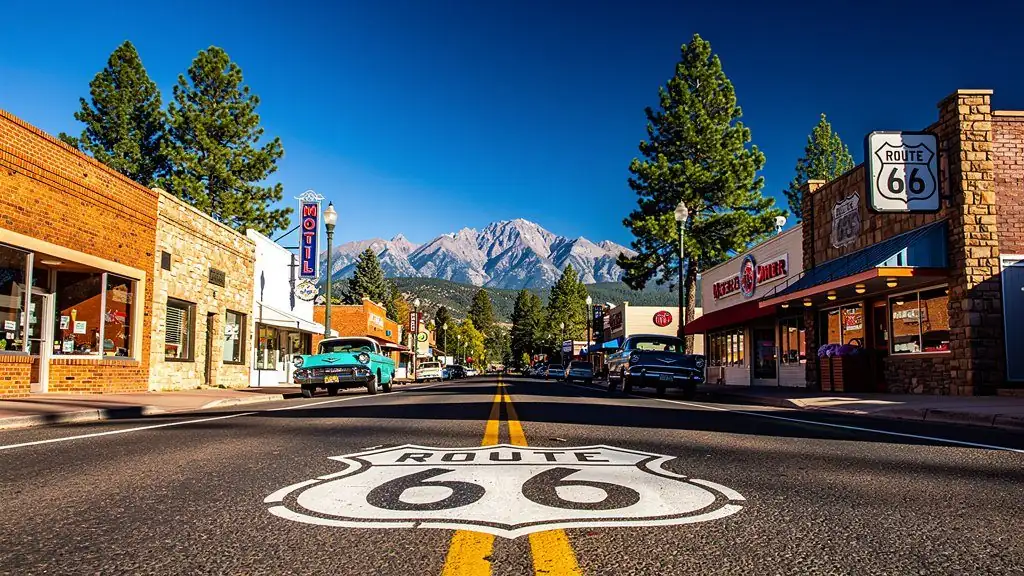
Route 66 in Flagstaff with classic cars, ponderosa pines and the San Francisco Peaks behind

FLAGSTAFF

Phoenix has the desert, Flagstaff has the mountain: a ponderosa forest town at 7,000 feet with a real ski hill, a Pluto-famous observatory, cliff dwellings in a canyon ten minutes from downtown, and a volcano you can walk around, all of it an hour and a half from the Grand Canyon. This is the whole town ranked, the peaks, the monuments, the ruins and the Route 66 core, with the 2026 logistics that decide whether your day works.

Flagstaff sits about 150 miles north of Phoenix on I-17, where the interstate gives up and climbs into the largest contiguous ponderosa pine forest in the world. It runs 25 to 30 degrees cooler than the Valley, it snows here in earnest, and the San Francisco Peaks stand over everything, with Humphreys Peak at 12,633 feet the highest point in Arizona. The town layers its lives on top of each other: a railroad and Route 66 downtown of brick and neon, a university of some 25,000 students, and a ring of national monuments so close that locals visit them the way other people visit parks across town. Most visitors pass through on the way to the Grand Canyon. The ones who stop for two nights tend to like it better than the place they were driving to. Start with the five below.

If you do only five

1. Book an evening at Lowell Observatory, where Pluto was found and the night sky is protected by law. 2. Ride up Arizona Snowbowl, for the gondola in summer and fall or the first ski turns of the season from November 20. 3. Walk the Island Trail at Walnut Canyon past 25 cliff dwelling rooms. 4. Spend a slow afternoon in historic downtown, Route 66, the 1926 train station and the brick blocks around Heritage Square. 5. Drive the Sunset Crater and Wupatki loop, a young volcano and a 104-room pueblo on one ticket.

Know before you go (2026)

Altitude is the first fact. At about 7,000 feet the air is thin and dry. Give yourself a day before big hikes, drink more water than feels necessary, and expect evenings to cool off hard in every season. The monuments run on passes: Walnut Canyon charges $25 per vehicle for seven days, a second $25 pass covers Sunset Crater and Wupatki together, and a $45 Flagstaff Area Monuments annual pass covers all three. All are cashless, and an America the Beautiful pass works at each. Winter is real: Snowbowl’s ski season is scheduled to open Friday, November 20, 2026, storms can slow I-17 and I-40, and trails at the monuments can close for ice with no notice. Distances: the Grand Canyon’s South Rim is 81 miles, about 90 minutes; Sedona is under an hour down Oak Creek Canyon; Phoenix is about 2 hours 15 minutes back down the hill. Pair it: our Flagstaff guide covers where to stay and the basecamp math, and Sedona vs Flagstaff settles which town deserves your nights.

The icons

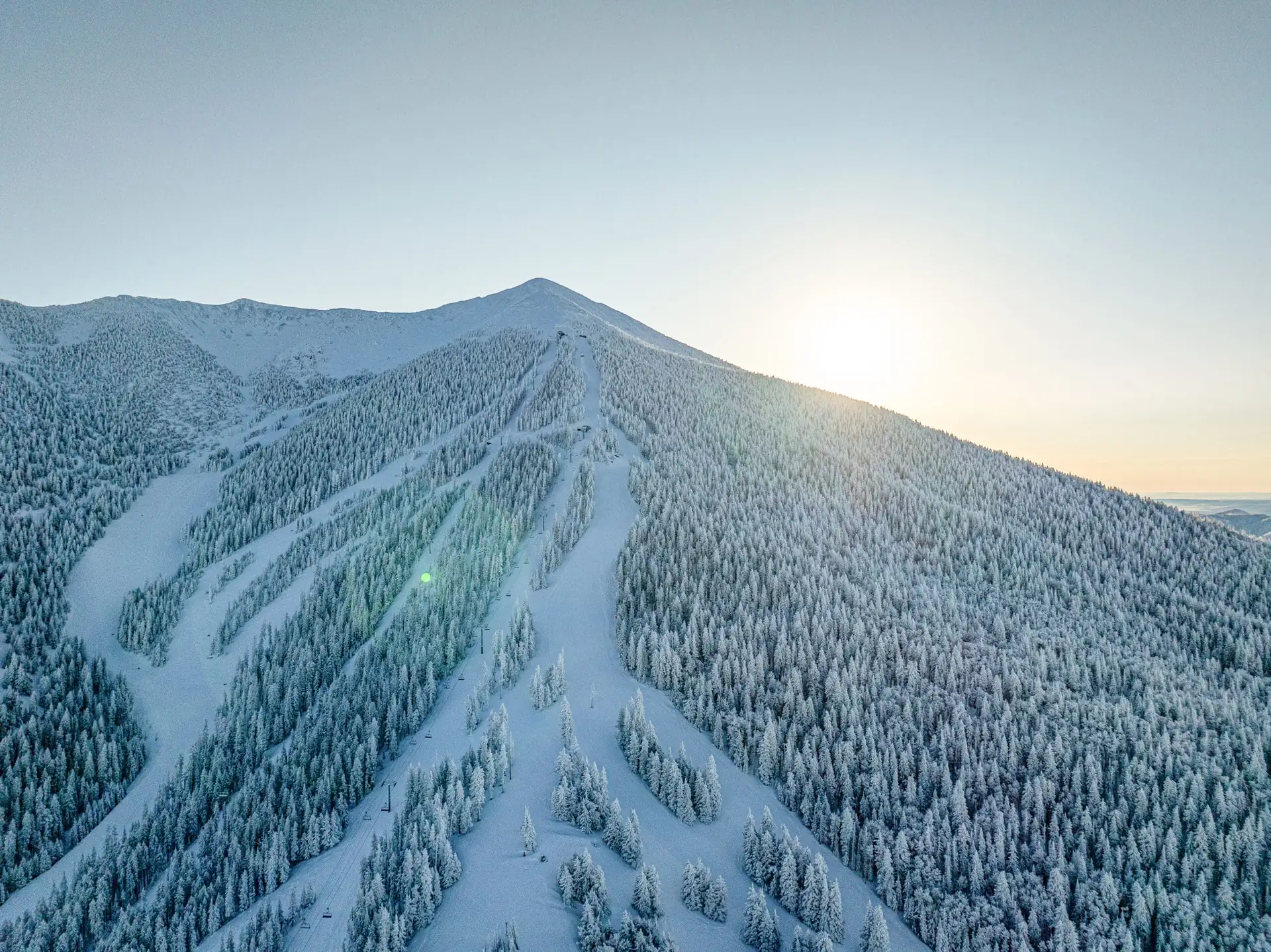
Arizona Snowbowl ski runs under fresh snow on Agassiz Peak above Flagstaff
Arizona Snowbowl on the flank of Agassiz Peak, fifteen minutes from downtown and a whole climate away.

Five stops carry Flagstaff’s reputation: the observatory on Mars Hill, the ski mountain on the Peaks, the Route 66 downtown at their feet, a canyon of cliff dwellings east of town, and the museum that explains the whole Colorado Plateau. Everything else on this list is a variation on one of those themes, so do these first and do them properly.

Observatory · Mars Hill

1Lowell Observatory

The reason Flagstaff guards its darkness. Percival Lowell founded this observatory on Mars Hill above downtown in 1894, Clyde Tombaugh discovered Pluto here in 1930, and the campus now pairs the historic telescopes with a modern Astronomy Discovery Center full of exhibits. General admission is $35 for adults, $20 for ages 6 to 17, under 5 free, and the gates run noon to 10 p.m., closed Tuesdays. The move is to arrive late in the day: tour the grounds in the last light, then stay for telescope viewing after dark, when the Milky Way comes up over a city that has limited its streetlights since 1958. Book ahead on weekends and check the site for the day you go, since hours shift with the seasons. Verdict: the best night out in Arizona, and it is not close.

Ski area · The Peaks

2Arizona Snowbowl

Flagstaff’s mountain, fifteen minutes up Snowbowl Road from downtown. In winter it is a proper ski area on the slopes of Agassiz Peak, and the 2026-27 season is scheduled to open Friday, November 20, 2026, weather permitting. In summer and fall the Arizona Gondola carries sightseers to 11,500 feet for a view that takes in the Grand Canyon on clear days, and the aspen stands along the road turn gold from late September into October. That warm-season run has closed for 2026 (it wrapped on October 18), and gondola tickets are priced by demand, so buy online ahead when it returns. Either way, the drive alone, from pine forest to alpine tundra line, is half the experience. Verdict: ski it in winter, ride it in fall, and respect it in every season, this is a real mountain.

Downtown · Route 66

3Historic downtown and Route 66

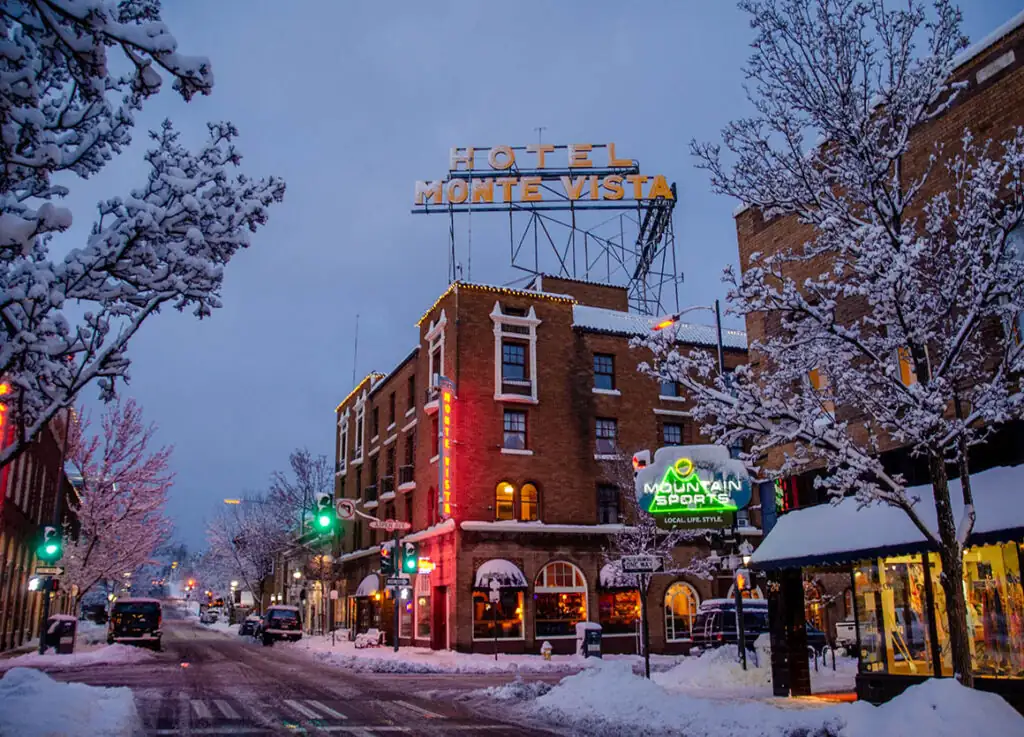
The walkable heart: a few dense blocks of brick storefronts where Route 66 runs past the train tracks, watched over by the 1927 Hotel Monte Vista sign. Heritage Square is the living room, an open plaza on Aspen Avenue that hosts concerts and gatherings through the year, and the blocks around it hold the coffee shops, outfitters, bookstores and galleries that give the town its college-meets-mountain feel. Trains roll through constantly, which is atmosphere by day and a consideration if your room sits trackside. 2026 is the Route 66 centennial year, and Flagstaff bills itself as the only 7,000-foot, pine-scented, dark-sky city on the Mother Road. Our Arizona Route 66 guide drives the whole state, town by town. Verdict: park the car and give downtown a full afternoon that drifts into evening.

National monument · Cliff dwellings

4Walnut Canyon National Monument

Ten minutes east of town, a green canyon drops below the pine forest, and its limestone walls hold rows of cliff dwellings the Sinagua people built between 1125 and 1250. The Island Trail is the visit: a paved, strenuous one-mile loop that descends 185 feet and passes 25 dwelling rooms at arm’s length, with more visible across the canyon. Entry is $25 per vehicle for seven days, the park is cashless, hours run 9 to 5, and the trail gate closes at 4, so do not save this for the end of the day. In winter the trail can close for snow and ice, sometimes on short notice. The climb back up, at altitude, is the honest price of admission. Verdict: the most affecting hour in the Flagstaff area, quiet, close and genuinely old.

Museum · Colorado Plateau

5Museum of Northern Arizona

The interpreter for everything else on this list. Set on a 200-acre ponderosa campus two miles north of downtown on the road to the Grand Canyon, the museum’s nine galleries cover the geology of the plateau, the Indigenous cultures who have lived on it for millennia, and the art it keeps producing. Admission is $18 for adults, kids 9 and under free, open daily 10 to 5 with last entry at 4. Go early in a Flagstaff stay rather than late: the volcanoes, pueblos and canyon country all read better once this place has explained them. Verdict: the smartest two hours in town, and the exhibits earn it.

[AFFILIATE: hotels in Flagstaff]

Peaks, pines and trails

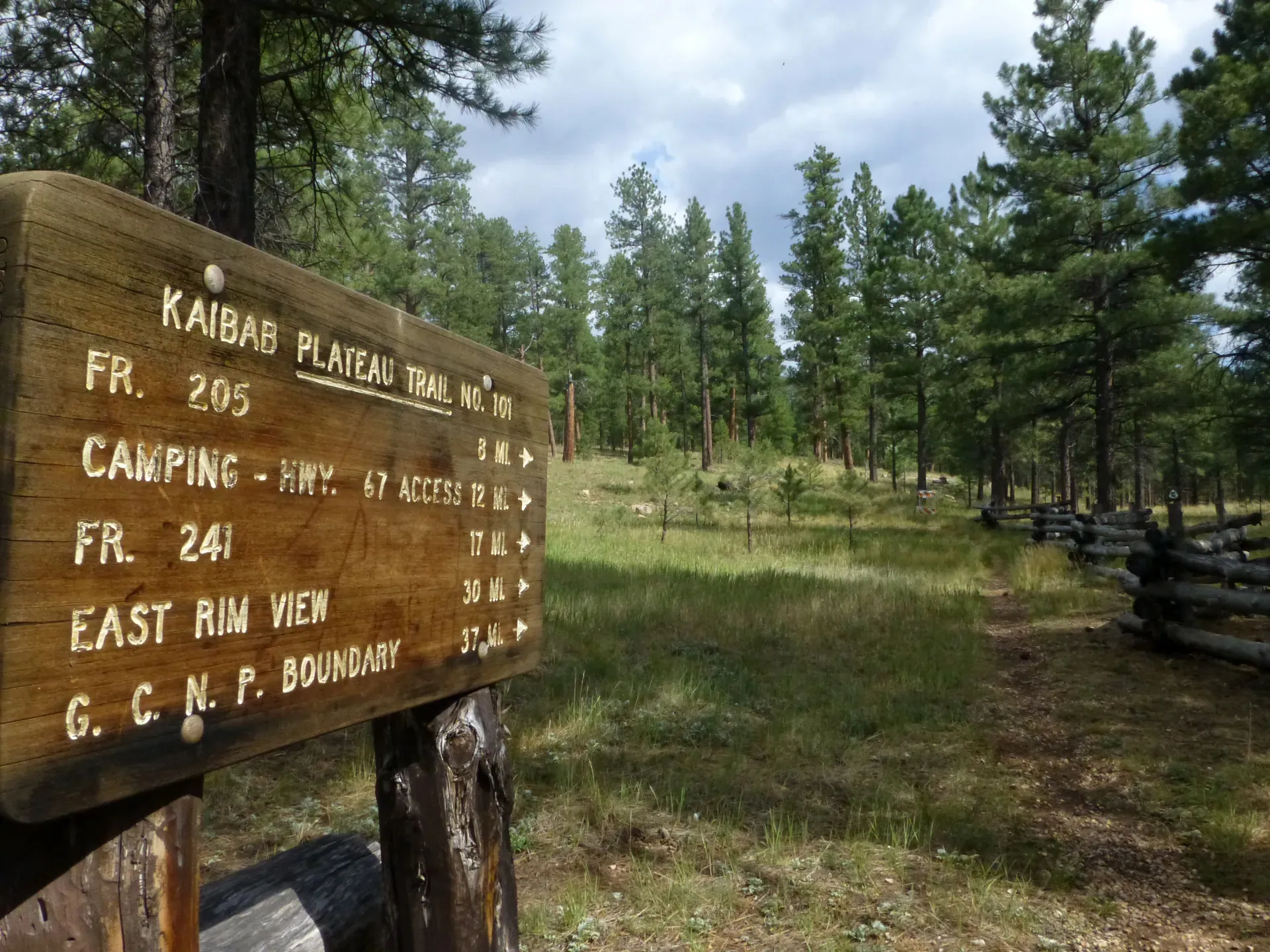
A ponderosa pine meadow in the high country of northern Arizona
Ponderosa country. Flagstaff sits inside the largest stand of these pines anywhere on earth. Photo: Kaibab National Forest, USFS, CC BY-SA 2.0.

Flagstaff’s backyard is the Coconino National Forest, and it starts at the edge of town. The trails below climb from city parks to the top of the state, drop into a lava tube that stays near freezing all year, and turn gold for a few weeks each fall. Altitude rules everything here: the trailheads start where most states’ summits end.

Summit · 12,633 ft

6Humphreys Peak

The top of Arizona. Humphreys Trail No. 151 climbs from Snowbowl’s lower lot, at about 9,200 feet, for five-plus miles one way to a 12,633-foot summit above treeline, where the Grand Canyon floats on the northern horizon. It is a serious summer day: start at dawn, carry real layers, and turn around if thunderheads build, because monsoon lightning owns these ridges from July to September and the Forest Service warns that snow can fall up here in any month. In winter and spring this is avalanche and mountaineering terrain, not a hike. Verdict: the state’s roof, earned the slow way, and only in the right season.

Lava tube · Underground

7Lava River Cave

About 14 miles northwest of town, a lava tube formed some 650,000 years ago runs for roughly a mile underground, the longest in Arizona. There is no lighting, no tour and no handrail past the entrance: you scramble down over boulders into air that holds 35 to 45 degrees all year, then walk the tube by your own light. The Forest Service asks for sturdy shoes, warm clothes and two or three light sources per person, and the site now requires a pass, $5 per vehicle per day from the on-site machine, with interagency passes accepted. The forest roads in are closed in winter, which turns the visit into a long ski or snowshoe approach. No dogs. Verdict: the strangest walk near Flagstaff, part hike, part spelunk, all yours to pace.

City trail · Easy

8Buffalo Park and the urban trails

Every town should have this: a flat two-mile loop, the Nate Avery Trail, across the top of McMillan Mesa on the north side of town, with 360-degree views from the Peaks to the red rocks of the Dry Lakes. It is the city’s most popular trail for a reason, a morning run, a dog walk and a sunset stroll in one, with the mountains arranged around you like a diorama. It connects into the Flagstaff Urban Trails System, a citywide web of wide, non-motorized paths that locals use to cross town without a car. Start here on day one to get your bearings and your lungs used to 7,000 feet. Verdict: the local’s daily mile, free and five minutes from downtown.

Fall color · Aspens

9Aspen Corner and the Snowbowl Road

For a few weeks each fall, usually late September into mid-October, the aspen groves along Snowbowl Road ignite. Aspen Corner, a signed stop partway up the mountain, is the classic frame: white trunks, gold leaves, the Peaks behind. The Kachina Trail picks up near the top of the road and wanders through aspen and fir with none of the summit’s commitment, and in summer the same corridor is the cool, green escape from any heat in town. Go on a weekday morning in peak color; the road is narrow and everyone has the same idea on October weekends. Verdict: Arizona’s best fall color, on the same road as its ski hill.

Preserve · Petroglyphs

10Picture Canyon Natural and Cultural Preserve

The quiet corner of the system, on the northeast edge of town where the Rio de Flag slips through a small basalt canyon. After wet weather the creek pours over a ledge in a proper waterfall, rare enough at this elevation, and the canyon walls carry petroglyph panels left by the same Sinagua world you meet at Walnut Canyon. Trails loop the preserve in an easy hour, and it stays local in a way the big monuments no longer do. Pair it with Walnut Canyon, ten minutes away, for the full story of water and stone on this side of town. Verdict: the connoisseur’s Flagstaff walk, waterfall when you are lucky, petroglyphs always.

Volcanoes and ancient pueblos

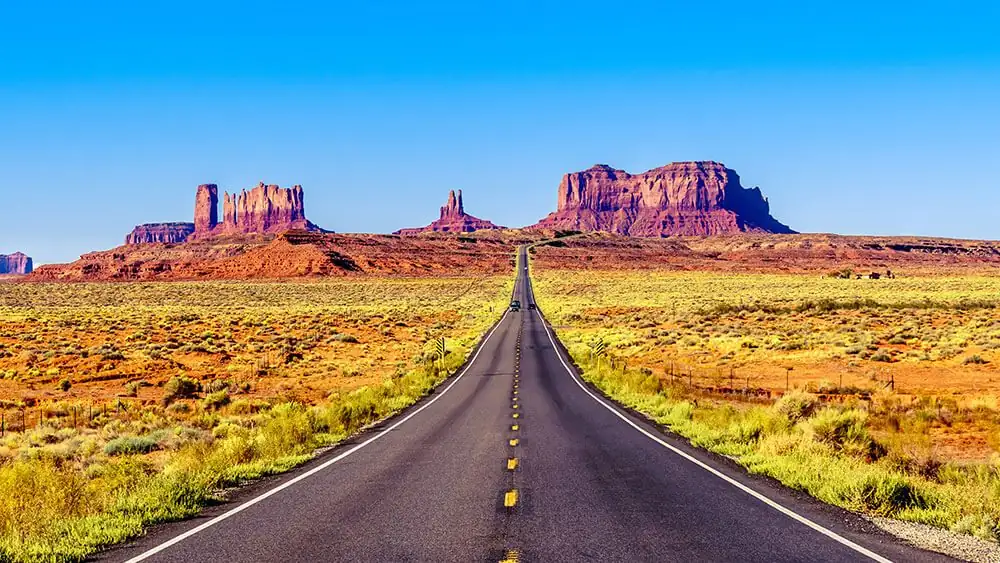
A northern Arizona highway running through open high-desert country
North on US 89, a 35-mile loop road strings a young volcano and a great pueblo into one drive.

Within a single hour’s loop north of town, the ground itself tells two linked stories: a volcano that erupted within human memory of the people living here, and the great houses those people built in its ash-enriched soil afterward. One $25 vehicle pass covers both monuments for seven days, the sites are cashless, and the 35-mile loop road between them is a destination in itself.

Volcano · Lava flows

11Sunset Crater Volcano National Monument

The youngest cone in the San Francisco Volcanic Field, a cinder cone that grew out of farmland starting around 1085, in the lifetime of the communities at Wupatki. You do not climb the crater itself, that has been off limits for decades. Instead, the one-mile Lava Flow Trail loops through the Bonito Lava Flow at its base, a frozen black river of jagged aa lava, with the upper quarter mile paved and accessible. The scale sneaks up on you: a thousand-foot cone, lava that looks poured last week, and pines slowly reclaiming the cinders. Visitor center hours run roughly 9 to 5 and shorten in winter, so check nps.gov before you go. Verdict: geology at walking pace, and the essential first half of the loop.

Pueblo · 104 rooms

12Wupatki National Monument

At the far end of the loop, red sandstone walls rise out of the desert grassland: Wupatki Pueblo, 104 rooms strong, the largest free-standing pueblo in northern Arizona, occupied from the early 1100s to the mid-1200s as a trade crossroads. A half-mile trail behind the visitor center circles the ruin, past its ballcourt, the northernmost ever found, its community room, and a blowhole where the earth breathes air in and out of a cave system below. Smaller pueblos, Wukoki and the Citadel among them, dot the drive. It is hot, bright and silent out here, the opposite pole of Flagstaff’s pines, forty minutes apart. Verdict: stand in the ballcourt at midday and the whole plateau story clicks.

Waterfall · Currently closed

13Grand Falls, the one to wait for

Every Flagstaff list used to end with Grand Falls, the tiered chocolate-brown cascade on the Little Colorado River, taller than Niagara on the rare weeks it runs. Here is the current truth: Grand Falls is closed to the public. Navajo Nation Parks has shut it over debris buildup in the area, with no reopening date posted, and a permit does not override the closure. So this is a placeholder, not a plan. When the Nation reopens it, go in the March to April snowmelt window, get the permit, and treat the place with the respect owed to someone else’s homeland. Until then, any site sending you there is working from old notes. Verdict: magnificent, ephemeral, and not open. Check Navajo Nation Parks before it ever re-enters your plans.

History and culture

The Hotel Monte Vista sign above a snowy downtown Flagstaff street at dusk
Downtown under fresh snow, the Monte Vista sign lit. Winter here is a season, not a weather event.

Flagstaff was a lumber town before it was anything else, and the money and the rail line left behind a stock of buildings and institutions a town this size has no right to. This is the indoor half of the list: a lumber barons’ mansion, a working university, a protected night sky, and a garden that keeps mountain hours.

Mansion · 1904

14Riordan Mansion State Historic Park

Two lumber-baron brothers built mirror-image houses joined at the middle in 1904: more than 13,000 square feet and 40 rooms of Arts and Crafts detail, designed by Charles Whittlesey, the architect of the El Tovar at the Grand Canyon, and kept with its original furniture. The interior is guided-tour only, $18 for adults and $12 for ages 7 to 13, about an hour, with reservations smart on weekends. From November 1 the winter schedule runs tours from 11 to 4 and the grounds stay open 10:30 to 5. In December the mansion dresses for Christmas, with twilight tours on December 20 to 23, the coziest ticket in town. Verdict: the best house tour in Arizona, full stop.

University · Since 1899

15Northern Arizona University and Old Main

Flagstaff is a college town, and NAU, founded in 1899, is why the downtown blocks hum in September and quiet down in May. The campus sits just south of downtown, an easy walk from Riordan Mansion, and its anchor is Old Main, the stone territorial-era building that now holds galleries and the university’s memory. Stroll the grounds, catch whatever the public calendar offers that week, and notice how the student energy balances the tourist flow. Some 25,000 students against a town of about 76,000 is a ratio you can feel. Verdict: an hour on campus explains the town’s other half.

Night sky · Since 2001

16A night in the first Dark Sky City

On October 24, 2001, Flagstaff became the world’s first International Dark Sky City, the model every dark sky community since has copied, and 2026 marks 25 years of it. The lighting codes show on any clear night: step away from the downtown lamps, at Buffalo Park or along the urban trails, and the Milky Way is simply there, over a city of 76,000 people. Lowell is the organized version of this experience; this entry is the free one, a blanket, a thermos and twenty minutes for your eyes to adjust. Our Arizona dark skies guide maps the state’s best night country from here. Verdict: the rare attraction that starts when everything else closes.

Garden · Seasonal

17The Arboretum at Flagstaff

Two hundred acres of ponderosa forest on the southwest side of town, planted with the native flora of the Colorado Plateau: wildflower meadows, a wetland, and gardens showing what grows at 7,150 feet. It is the gentle half-day in a Flagstaff week, and it keeps mountain seasons: the 2026 season ran April 29 to October 25, Wednesdays to Sundays, so as of this guide it has just closed for winter and reopens in late April. Admission in 2026 was about $14 for adults, with leashed dogs welcome for a couple of dollars more. Put it on a spring or summer trip, ideally paired with a slow morning and nowhere else to be. Verdict: closed now, essential later. Flagstaff in bloom is a different town.

Station · 1926

18The Visitor Center and the trains

Start any first visit here: the Flagstaff Visitor Center occupies the west end of the 1926 Santa Fe depot at 1 E Route 66, a Tudor Revival station that still works for a living, with Amtrak’s Southwest Chief calling daily and freight trains rolling past around the clock. Inside are maps, staff who actually know the roads, and a model railroad of 1920s downtown. It is also the official stop for Route 66 centennial swag and passport stamps. Then step outside and watch a mile of freight grind through the middle of town, the sound Flagstaff was built around. Verdict: ten minutes of orientation that saves you an hour of guessing.

With kids, and the thrill seekers

Flagstaff’s altitude makes it Arizona’s summer refuge for Valley families, and its winter makes it the snow trip. The three below cover the energy-burning end of the list, one in the pines at the edge of town, one a short drive west, and one that only exists when the storms cooperate.

Treetops · Fort Tuthill

19Flagstaff Extreme Adventure Course

In the ponderosas of Fort Tuthill County Park, just south of town, a treetop obstacle course climbs from easy platforms to genuinely committing ones, black diamond runs included. The adult adventure course and the zipline course run $60 each and take three to four hours; the kids course for ages 7 to 11 is $30 and about two hours. It operates year-round, weather permitting, and winter sessions stop below 25 degrees, which tells you something about Flagstaff cold. Book ahead in summer, and bring gloves in the shoulder seasons. Verdict: the afternoon that tires out teenagers, a rare and valuable thing.

Wildlife · Williams

20Bearizona

Thirty-odd miles west in Williams, a drive-through wildlife park where bison, wolves, bears and bighorns roam a pine forest you cross in your own car, three miles of it, windows up. After the drive, Fort Bearizona is the walk-through half, with smaller animals, shows and the jaguar exhibit. Admission is per person, $30 for adults on weekdays and $35 on weekends, kids 4 to 12 at $20 and $25, ages 3 and under free, and it is open year-round. Pair it with a Williams wander down its own stretch of Route 66 and the day fills itself. Verdict: the family day trip that never misses, bears at ten paces from the driver’s seat.

Snow · Winter only

21Snow play and the Nordic Village

When the storms land, and at 7,000 feet they land, Flagstaff turns into the snow day for the whole state. Beyond the ski hill, the Arizona Nordic Village up US 180 grooms cross-country ski and snowshoe trails through the pines, the low-key, low-cost way into a winter forest, and designated snow play areas around town fill with sleds on storm weekends. The honest warnings: go early, because half of Phoenix has the same idea, roads ice up by late afternoon, and a sledding hill at this altitude will wind you faster than you expect. Verdict: winter’s dividend. The desert comes to Flagstaff to remember what snow is.
Eat, then day trips

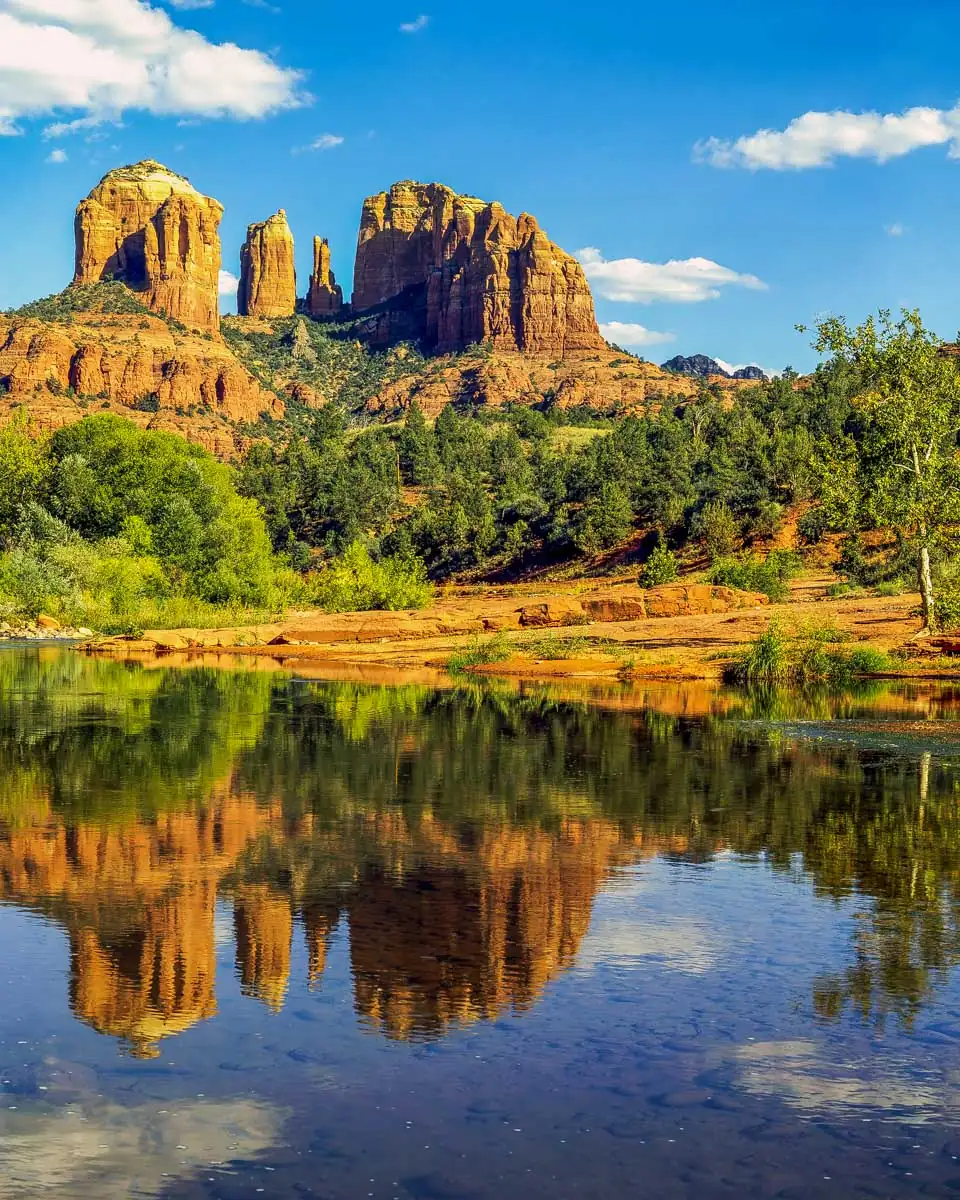
Oak Creek flowing below red rock walls on the drive between Flagstaff and Sedona
Oak Creek Canyon, the 27-mile scenic route down to Sedona, often called a smaller Grand Canyon with a road in it.

Flagstaff eats like a college town with a lumberjack past: plenty of everything, priced for locals, concentrated downtown. And it sleeps like a basecamp, because three of Arizona’s great drives start at its edges. Eat downtown, then point the car at the canyon, the red rocks, or the crater.

Food · Downtown

22Eat and drink your way across downtown

The circuit is compact. Start the day with coffee and a pastry from one of the local roasters around Heritage Square, graze through lunch at the burger and pizza spots the students queue for, and book the evening at one of the chef-led rooms that punch above the town’s weight, the kind of places where the menu follows the high-country seasons. Diablo Burger, Pizzicletta and Coppa Café are the names locals give first, and Tourist Home All Day Café does the best breakfast argument in town. Everything sits within a few walkable blocks, so the plan is simply to wander hungry. Verdict: no resorts, no scene, just a small town feeding itself well.

Day trip · 81 miles

23The Grand Canyon, as a day trip or a basecamp

The South Rim is 81 miles and about 90 minutes from downtown, close enough that Flagstaff works as the canyon’s basecamp, with better beds and dinners than the rim offers and a mountain town to come home to. The honest trade, from our Flagstaff guide: you will not casually catch both sunrise and sunset at the rim, so pick one, drive it in the light you have, and do the rim properly with our South Rim first-timer’s guide. Coming in winter, add our North Rim status guide to the reading; the North Rim is a different trip entirely, and its season and fire recovery change by the month. Verdict: sleep in the pines, spend the day at the edge of the world.

Day trip · Oak Creek Canyon

24Sedona, down the canyon

The drive is the destination first: Highway 89A drops off the rim at Oak Creek Vista and switchbacks down into a red rock canyon with the creek at the bottom, about 27 miles of it, before Sedona spreads out at the end. Swim at Slide Rock in summer, hike West Fork in fall when the maples turn, and give Sedona its own full day minimum with our Things to Do in Sedona ranking. In snow, skip 89A and take I-17 around, the canyon road ices early and melts late. Torn between the two towns for your nights? Sedona vs Flagstaff was written for exactly that argument. Verdict: two great towns, one unbeatable road, no wrong answer.

Day trip · I-40 east

25Meteor Crater and Winslow, east on I-40

Thirty-five miles east, Exit 233, a hole in the ground three-quarters of a mile wide: Meteor Crater, the best-preserved impact crater on earth, left by a meteor some 50,000 years ago. It is privately run, $29 for adults, $25 for ages 6 to 12, under 5 free, and the ticket covers a discovery center, theaters and the rim lookouts, with the guided floor tours paused for now while the trail is restored. Keep driving another half hour and you are in Winslow, standing on the corner our Route 66 guide sings about, with the Petrified Forest beyond it for anyone with a full day. Verdict: the strangest geology in Arizona, paired with its most famous street corner.

When to go

Summer is Flagstaff’s gift to Arizona: highs in the 70s and low 80s while Phoenix bakes, wildflowers in the high meadows, and monsoon thunderstorms from July to September that build by afternoon and clear by dinner. Fall brings the aspens, late September into October, and the calmest hiking weather of the year. Winter is the second high season: ski season at Snowbowl is scheduled to open November 20, 2026, downtown goes full Christmas-card under snow, Riordan Mansion runs its twilight tours in December, and storms occasionally close the interstates for a few hours, so travel days need flex. Spring is the quiet bargain, muddy trails up high but empty monuments, until the Arboretum reopens in late April and the town wakes up. Whenever you come, layer like you mean it: a 30-degree swing between noon and midnight is an ordinary day at 7,000 feet.

Pick your Flagstaff

  • Only one day? Walnut Canyon at 9, downtown for lunch, the Museum of Northern Arizona, then Lowell Observatory after dark.
  • A weekend? Day one: the icons. Day two: the Sunset Crater and Wupatki loop, with Buffalo Park at sunset.
  • Here for the Grand Canyon? Sleep here, day trip the rim, and read the Grand Canyon in one day plan before you go.
  • With kids? Bearizona, Flagstaff Extreme, and snow play in season, with the museum’s galleries for the quiet hour.
  • Here to shoot? Aspen gold in October, the Peaks under fresh snow, and the darkest city skies in America. Our dark skies guide has the settings and the seasons.
  • On a longer loop? The 7-day Arizona road trip already sleeps a night here, between Sedona and the canyon, exactly where Flagstaff belongs.

Decide where you sleep by style: downtown puts the food, the trains and the observatory shuttle at your door; the east side along I-40 puts you ten minutes closer to Walnut Canyon and the monuments; a cabin south of town puts you in the pines with the deer. Flagstaff rewards staying put. Give it the nights you were going to spend driving past it.

About & Disclosure

TRVL Guide is a travel resource site. Some links on this site may be affiliate links. If you book through them, we may earn a commission at no extra cost to you. It helps keep the guides free.

Heading down the hill next? Things to Do in Sedona, the red rocks ranked the same way, or Things to Do in Tucson for the desert end of the state.

The trvlguide letter

Flagstaff, in your inbox.

One email a week in season, new guides, event weekends and the desert windows worth planning around, from Flagstaff to Sedona to the Grand Canyon. Free, no spam.