Why Arizona owns the night
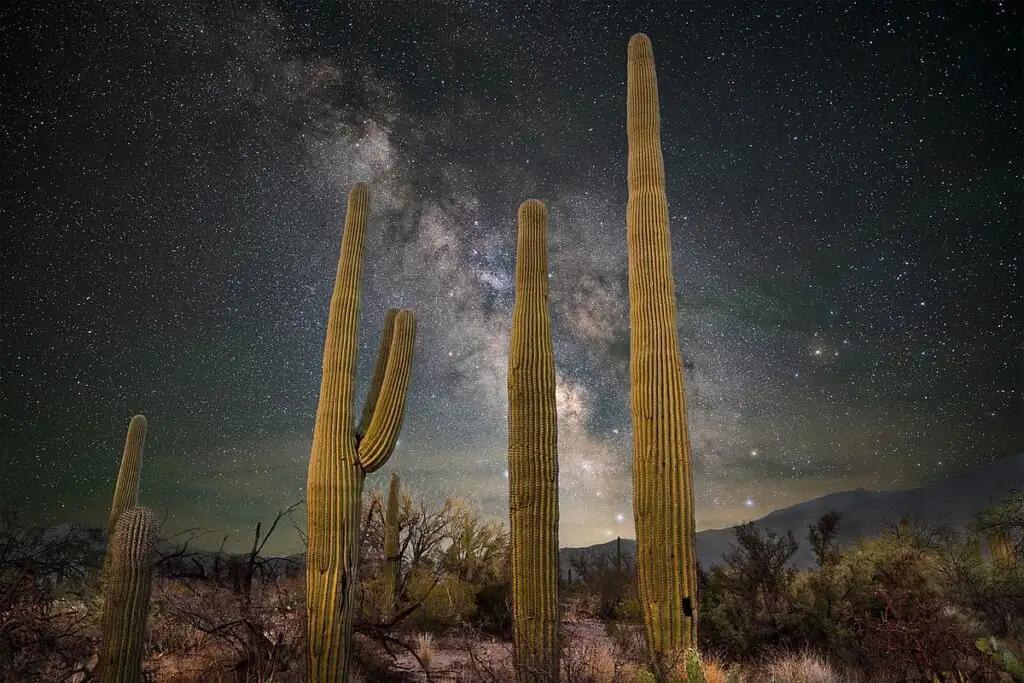
High elevation, dry air, and whole counties that treat darkness as a resource: Arizona has more certified dark-sky places than almost anywhere on Earth. The Milky Way core rises here on summer nights bright enough to cast a faint shadow, and the foregrounds — red rock, canyon rims, saguaro silhouettes — are the ones photographers cross oceans for. You don't need a telescope. You need a moonless night, a tripod, and this plan.
Flagstaff: where dark skies became law
In 2001 Flagstaff became the world's first International Dark Sky City — the culmination of a lighting culture that started in 1958, when the city passed the first ordinance protecting the night for its observatories. This is where Pluto was discovered, at Lowell Observatory on Mars Hill, which still runs public telescope nights under genuinely dark skies in the middle of town. Base yourself here for the highest, driest air in Arizona: transparent summer nights for the Milky Way, and winter nights so clear the sky looks etched — bring serious layers, because 7,000 feet is cold after midnight in every month.
[AFFILIATE: hotels in Flagstaff] · [AFFILIATE: Lowell Observatory tickets]
Sedona & the Grand Canyon
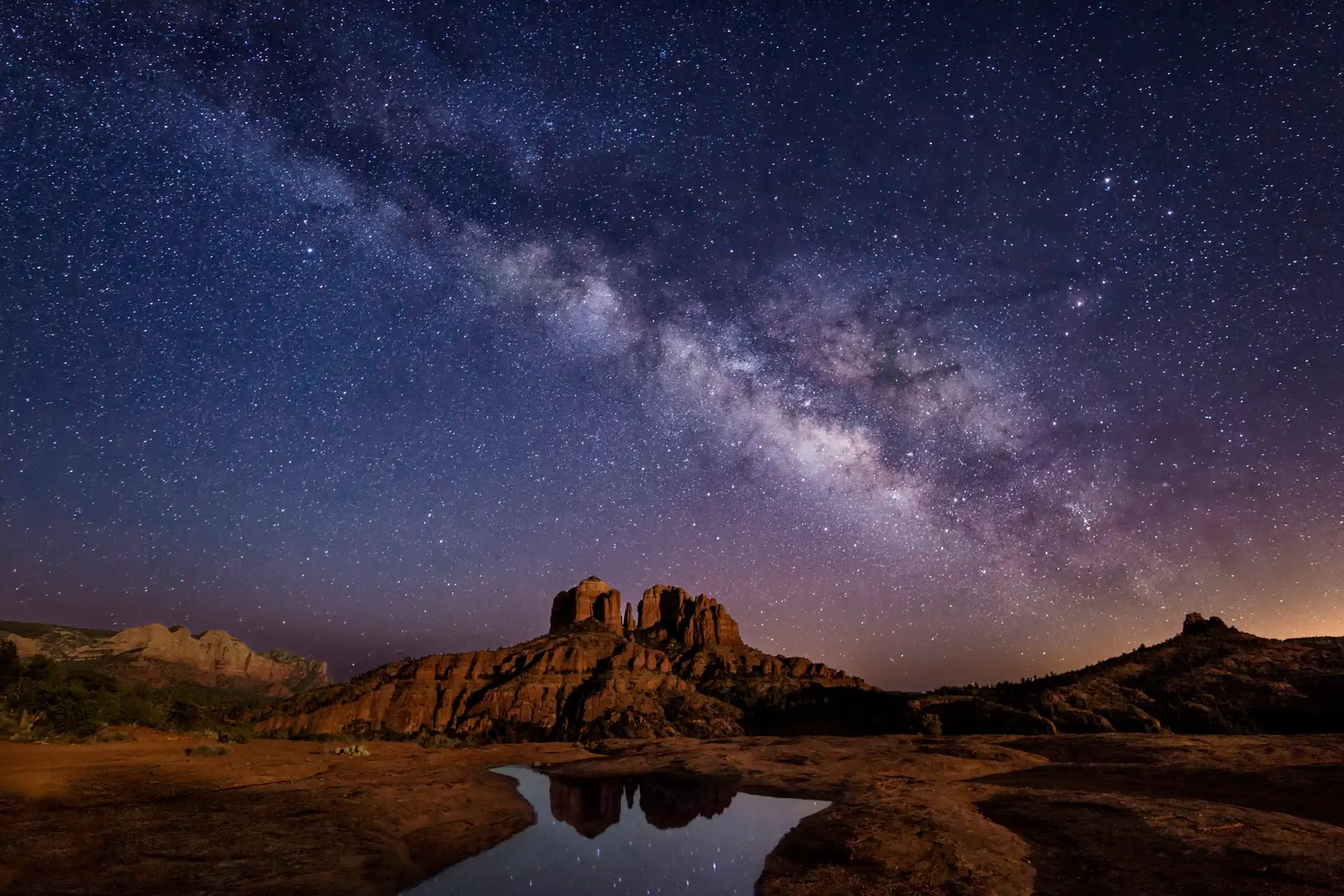
Sedona, an International Dark Sky Community, puts the galaxy over glowing-red rock: shoot Cathedral Rock or Bell Rock from a trailhead lot an hour after full dark, when the formations hold just enough ambient light to separate from the sky. The Grand Canyon goes further still — as an International Dark Sky Park, its rim viewpoints sit above a mile of empty air, and on new-moon nights the canyon below is simply black, the river of stars overhead doubled by the silence. The park's annual night-sky celebrations each June are worth planning around; check the park's current schedule.
[AFFILIATE: Sedona stargazing tours] · [AFFILIATE: hotels at the Grand Canyon]
When to go: months and moons
- Milky Way season: The galactic core is up in the late evening from about April through September, and in the pre-dawn sky in February and March. June and July offer the core high overhead by midnight — but July and August are monsoon season, when storms can cloud out whole nights (and reward the patient with lightning-lit skies between cells).
- Moon phase is everything: Plan around the new moon, or a moon that sets early. Even a quarter moon washes out the faint structure of the galaxy; the five nights centered on new moon are prime.
- Winter (Nov–Feb): The core is gone, but Orion, the winter Milky Way, and the clearest, steadiest air of the year take over — prime time for star trails over the canyon and desert.
- Give your eyes a full 20–30 minutes to adapt, and use a red light only — one white phone flash resets the whole group's night vision.
Beginner field kit & settings
- A tripod is non-negotiable. Start simple: widest lens you have, focus on a bright star, high ISO, exposures in the 15–25 second range before stars begin to trail, and a two-second timer so the tripod settles. Then adjust by test frame, not by formula.
- Shoot a foreground while a sliver of twilight remains — the classic blue-hour blend — or light-paint rock gently with a dim headlamp during the exposure.
- Check parking and after-dark rules at trailheads and park viewpoints before you go; rules vary by site and season. Dress for temperatures 20 degrees colder than the daytime forecast suggested.
- No gear? Book a guided stargazing night — local operators bring the big telescopes, the laser pointers, and the hot drinks.
[AFFILIATE: Grand Canyon stargazing tours] · [AFFILIATE: hotels in Sedona]
About & Disclosure
TRVL Guide is a travel resource site. Some links on this site may be affiliate links — if you book through them, we may earn a commission at no extra cost to you. It helps keep the guides free.