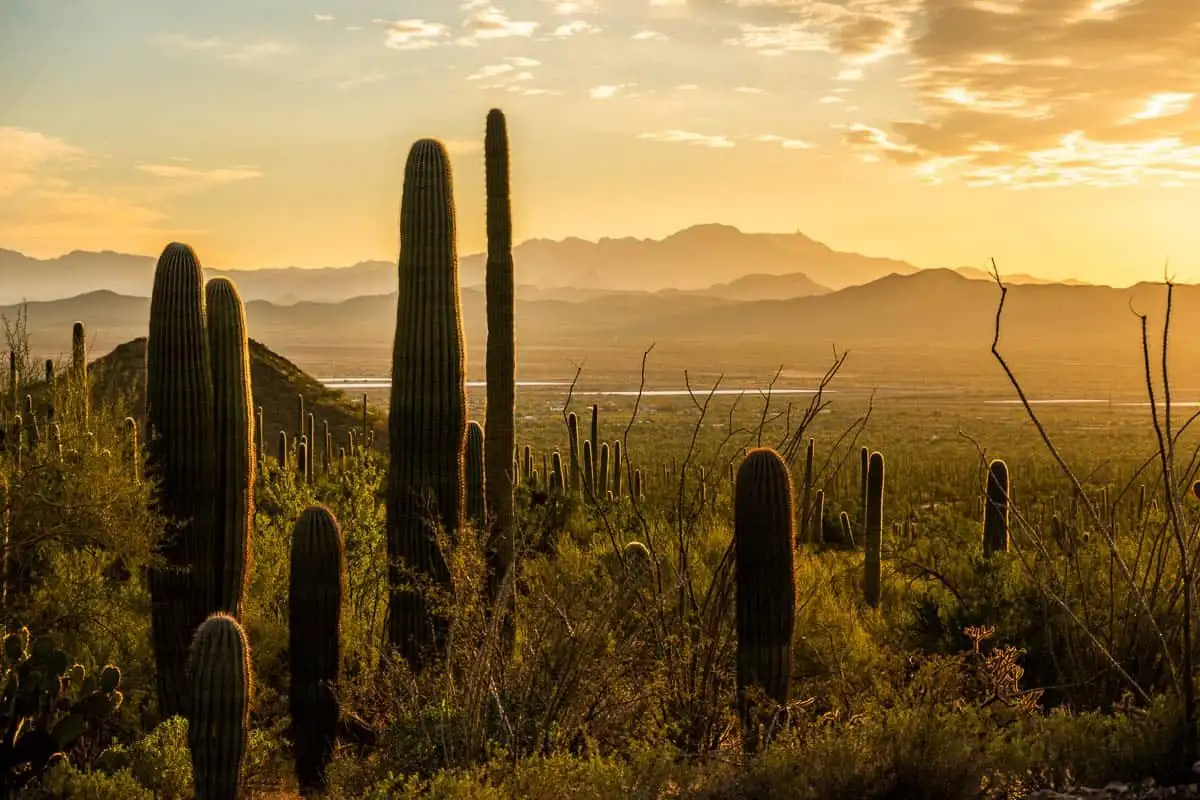
October to April is Tucson’s season: hiking weather, the Desert Museum at its best, and the city’s big calendar. November brings the All Souls Procession, our All Souls guide covers the night about 150,000 people walk. February is the fullest month of the year, when the gem and mineral shows take over venues across the city and the weather is perfect; a Tucson in February guide is next in this series. May to September flips the rhythm: dawn hikes, museum middays, monsoon storms on July to September afternoons, Mount Lemmon as the standing escape, and the lowest hotel prices of the year as fair exchange. Whenever you come, build the day around the sun, and group the city by corners: west one day, foothills the next, the historic core on streetcar time.
TUCSON
Phoenix gets the resorts, Tucson gets the soul: a national park that wraps around both sides of the city, the finest desert museum in the country, a 1790s mission that still holds Mass, and a food scene UNESCO honored before any other American city. This is the whole city ranked, the saguaro forests, the canyon, the sky island mountain, the old barrios and the big airplanes, with the logistics that decide whether your day works.
Tucson sits about 115 miles southeast of Phoenix on I-10, ringed by five mountain ranges and built on one of the oldest continuously farmed valleys in North America. It was a Spanish presidio in 1775, decades before Phoenix existed, and it still feels older, scruffier and more itself than the capital. The sights spread across four corners: the Desert Museum and Saguaro West out past the Tucson Mountains, Sabino Canyon and Mount Lemmon in the northeast foothills, the mission and the airport museums to the south, and the historic core, downtown, Fourth Avenue and the university, in the middle. Nobody does Tucson in a straight line. Group your days by corner, start early, and let the evenings belong to the food. Start with the five below.
If you do only five
1. Spend a morning at the Arizona-Sonora Desert Museum, part zoo, part botanical garden, nearly all outdoors. 2. Drive Saguaro National Park West the same day, it is minutes away, and finish at Gates Pass for sunset. 3. Walk or ride the Sabino Canyon road at sunrise. 4. Stand inside Mission San Xavier del Bac, the White Dove of the Desert. 5. Eat like the UNESCO City of Gastronomy Tucson is: a Sonoran hot dog for lunch, a proper Sonoran dinner after dark.
Know before you go (2026)
One park, two districts. Saguaro National Park charges $25 per vehicle for a 7-day pass that covers both the west and east districts, and the park is cashless, bring a card or an America the Beautiful pass. The districts sit about an hour apart with the whole city between them, so pick one per half day and pair the west district with the Desert Museum. The heat sets the clock: October to April is prime season; May to September, hike at dawn, museum at midday, and escape up Mount Lemmon when the valley bakes. Getting around: Tucson is a driving city, but the Sun Link streetcar is fare free and links the university, Fourth Avenue, downtown and the Mercado District, so the historic core needs no car at all. Distances: downtown to the Desert Museum is about 30 minutes west, downtown to Sabino Canyon about 30 minutes northeast, San Xavier about 15 minutes south. Pair it: our Tucson and Saguaro weekend guide strings the best of it into two days, and Things to Do in Phoenix covers the other end of I-10.
The icons
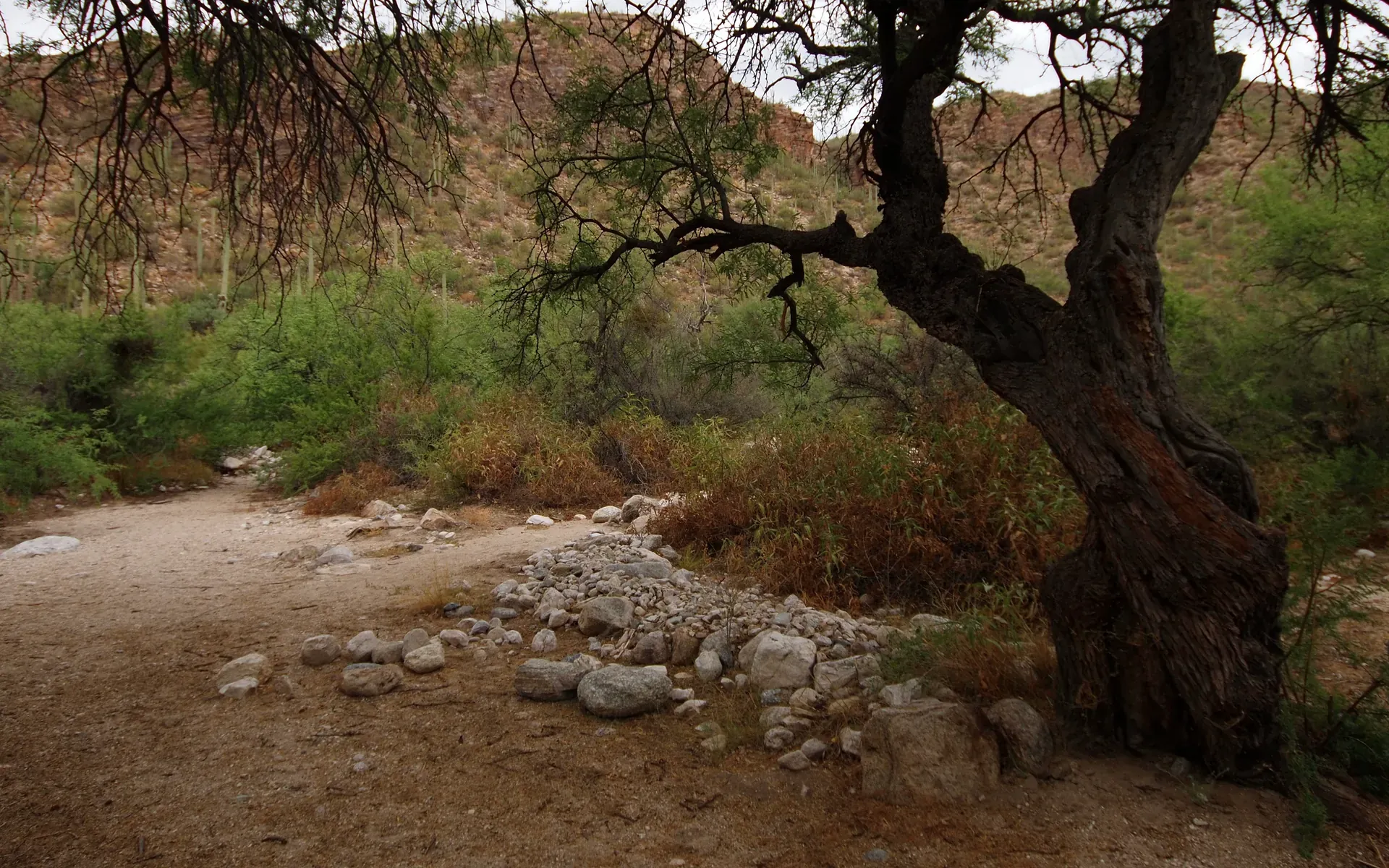
Five places carry Tucson’s reputation, and no two sit in the same corner of the city: the great outdoor museum and both halves of the national park out west and east, the canyon in the foothills, and the white mission in the Santa Cruz valley. Do the Desert Museum and Saguaro West on one day, Sabino Canyon on a morning, Saguaro East when you want the quieter park, and San Xavier whenever the light is good.
1Arizona-Sonora Desert Museum
Not really a museum, and that is the point: 98 acres on the west edge of the city where the exhibits are alive, mountain lions and prairie dogs in natural enclosures, a hummingbird aviary you walk inside, a raptor free-flight show, and some 1,200 kinds of native plants along almost two miles of desert paths. About 85 percent of it is outdoors. Admission is $29.95 for adults and $24.95 for ages 3 to 12, open every day of the year, 8:30 to 5 from October to May. Arrive at opening, when the animals are active and the light is kind, and give it a full half day. Verdict: the single best introduction to the Sonoran Desert anywhere, and it makes the national park next door read twice as deep.
2Saguaro National Park West (Tucson Mountain District)
The densest saguaro forest in the park, and the easiest half to love fast: the unpaved Bajada Loop Drive rolls through hillsides of giant cacti, the Valley View Overlook frames the whole Avra Valley, and the Signal Hill picnic area hides a petroglyph panel on a short climb. The Red Hills Visitor Center is the orientation stop. This is the district to pair with the Desert Museum, five minutes down Kinney Road, and with a Gates Pass sunset on the way home. Verdict: the classic saguaro postcard, earned at 25 mph on a dirt loop.
3Saguaro National Park East (Rincon Mountain District)
The bigger, wilder half: an 8-mile paved Cactus Forest Loop Drive, one way, past old, many-armed saguaros, with trailheads for longer hikes climbing toward Mica Mountain at 8,666 feet. The vehicle gate runs 5 a.m. to 8:30 p.m., walkers and cyclists can come and go around the clock, and crowds thin out fast past the first overlooks. Go at sunrise, when the Rincons go pink and the loop is nearly empty. Verdict: fewer people, older cacti, longer trails, the local’s district.
4Sabino Canyon
Tucson’s front yard: a desert canyon cut into the Catalina foothills, with a 3.8-mile paved road closed to cars, a seasonal creek, and cottonwoods in the wash. The electric Sabino Canyon Crawler shuttle ($15 adults, $8 ages 3 to 12) runs the road with nine stops and hop-on, hop-off privileges; walkers who start at dawn get the canyon to themselves before the first shuttle. Day use is $8 per vehicle. The visitor center opens at 8, but the trails and the road belong to early risers long before that. Verdict: the easiest great desert walk in Arizona, and the best sunrise in the city limits.
5Mission San Xavier del Bac
The White Dove of the Desert, a white stucco church built between 1783 and 1797 on Tohono O’odham land about 10 miles south of downtown, and still a working parish. The interior is the treasure: original frescoes, statues and murals in the finest Spanish Colonial church standing in the United States. Entry is free, the church is open daily (currently 9 to 4 for visitors), and free docent tours run most days except Sunday. Go early for quiet and clean light on the facade, and be respectful, this is a place of worship first and a sight second. On weekends, O’odham food stands in the plaza sell fry bread worth the drive on its own. Verdict: the most beautiful building in Arizona, full stop.
[AFFILIATE: hotels in Tucson]
The desert and the hikes
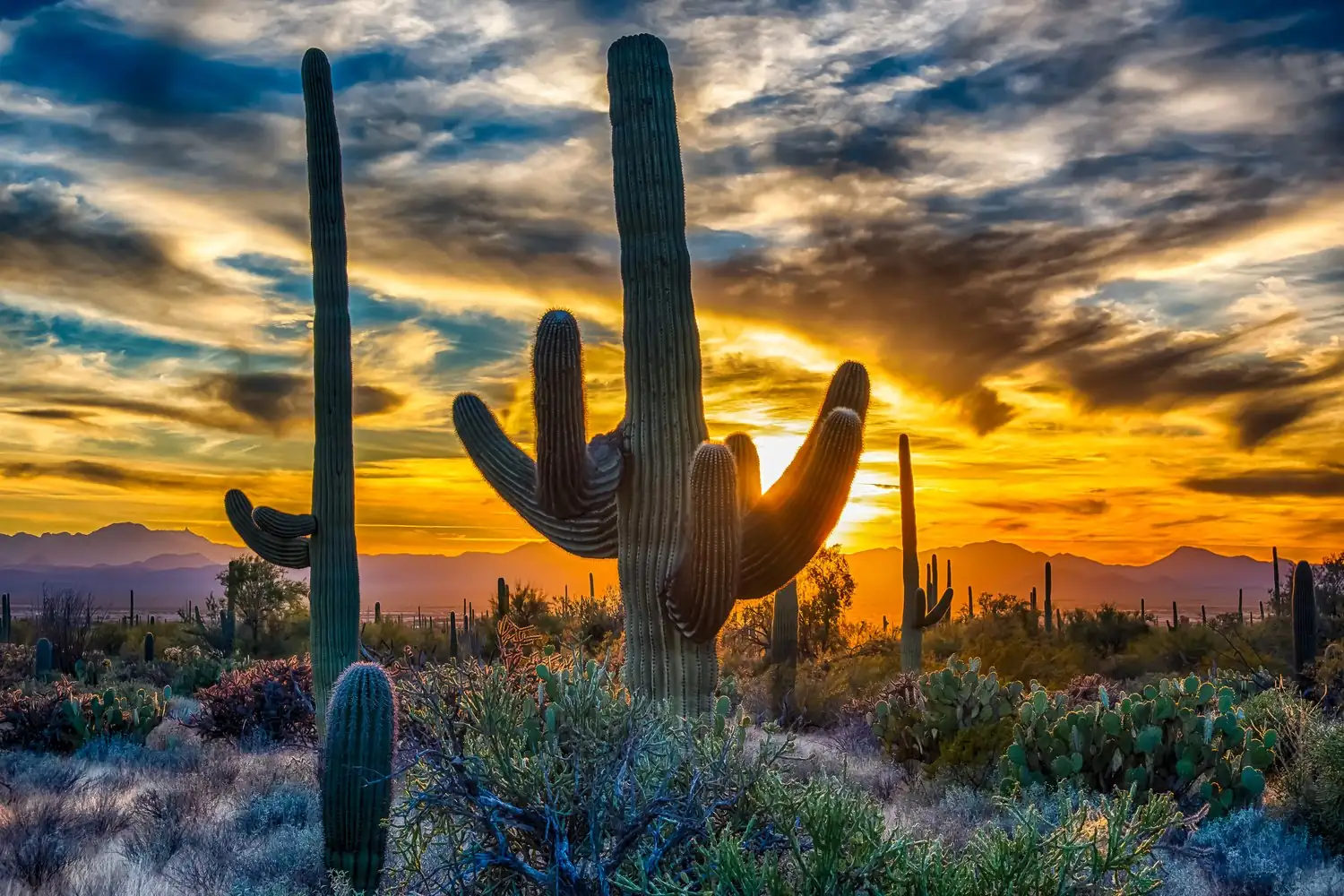
Tucson’s recreation is written in elevation. The valley floor holds the saguaros, the foothills hold the canyons and the waterfalls, and one famous road climbs from cactus to pine forest in an hour. Hike early, carry more water than you think you need, and remember that summer rain, not winter, is what fills the falls.
6Seven Falls, Bear Canyon
The hike Tucsonans measure other hikes against: up Bear Canyon from the Sabino Canyon visitor center to a staircase of falls and clear pools. It is about 8.5 miles round trip on foot, or roughly 5 if you ride the Bear Canyon shuttle to the trailhead. The trail crosses the creek seven times, so wet shoes are part of the deal when the water runs. The falls flow best from October to May and after storms. Start at dawn, swim at the top, and walk out before the canyon turns into an oven. Verdict: a desert oasis that earns every step, when the water is in.
7Mount Lemmon and the Catalina Highway
The great escape: 27 miles of paved switchbacks climbing more than 6,000 feet from saguaro desert to ponderosa pine forest, past hoodoos at Windy Point to the village of Summerhaven near the top of a peak over 9,100 feet. Temperatures drop 20 to 30 degrees on the way up. Ride the Ski Valley chairlift, the southernmost ski lift in the continental United States runs it year round for views, eat a giant cookie in Summerhaven, and come down at sunset. Verdict: Mexico to Canada, ecologically speaking, in one tank of gas, and Tucson’s summer pressure valve.
8Gates Pass and Tucson Mountain Park
The city’s sunset seat: a winding pass through the Tucson Mountains west of downtown, with pullouts above a saguaro forest that catches fire in the last light. The county park around it adds miles of quiet desert trails if you come earlier. Arrive 45 minutes before sunset on weekends, the top lot fills, and pair it with Saguaro West or the Desert Museum earlier the same day, they are all on the same road system. Verdict: the best free show in Tucson, nightly.
9Catalina State Park and Romero Pools
In Oro Valley at the foot of the Catalinas, this state park is the trailhead side of the range: desert grassland, big mountain views, and the Romero Canyon trail climbing about 5.5 miles round trip to Romero Pools, a string of rock pools that hold water long after the rains. A small per-vehicle entry fee applies. Birders come for the canyon trails at dawn; everyone else comes for the pools after a wet winter. Verdict: the Catalinas without the Sabino crowds.
10Tumamoc Hill and Sentinel Peak
Two local rituals. Tumamoc Hill is a paved road climbing an 860-acre desert research reserve just west of downtown, about 3 miles round trip, open to walkers early and late in the day (check the posted hours), and packed with Tucsonans getting their climb in before work. Sentinel Peak, the A Mountain, is the drive-up version: a giant whitewashed A on the slope since 1916 and a free panorama over the whole basin from the top. Verdict: do one at sunrise and the other at sunset and you have seen Tucson the way its people do.
History and culture
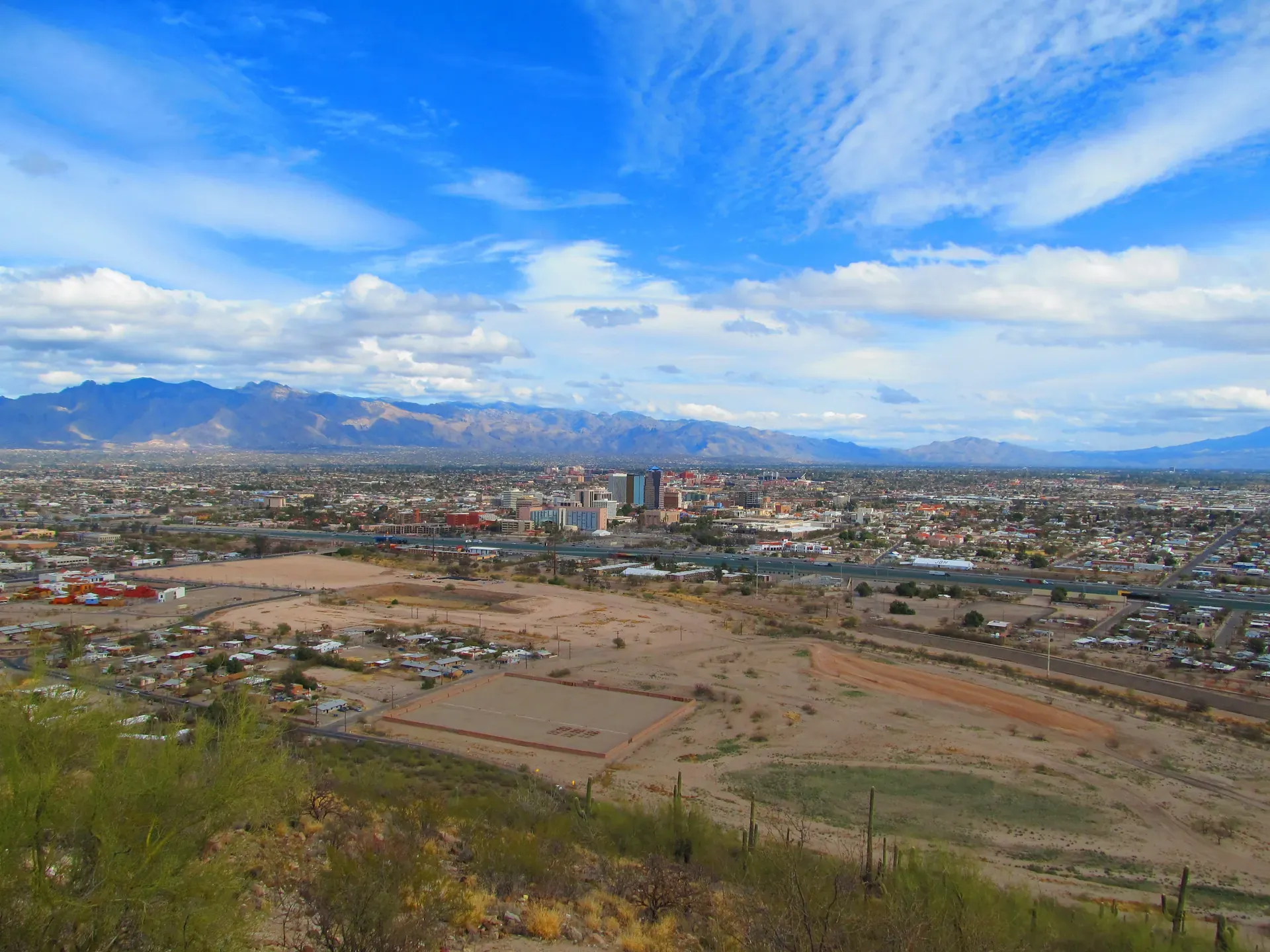
People have farmed the Santa Cruz valley for some 4,000 years, Spain built a presidio here in 1775, and the city that grew up layers O’odham, Spanish, Mexican and American history into a few walkable districts. This is the indoor and old-town half of the list. The free Sun Link streetcar strings most of it together, so park once and ride.
11Presidio San Agustín and Barrio Viejo
Start where Tucson started: the reconstructed corner of the 1775 Spanish fort, with living-history demonstrations and exhibits on the soldiers and settlers of the frontier outpost. Then walk south into Barrio Viejo, the old Mexican-American neighborhood of flat-roofed adobe row houses painted in bright colors, with the El Tiradito wishing shrine tucked into Main Avenue. It is the most atmospheric stroll in the city. Verdict: two hours that explain everything else you will see in Tucson.
12Tucson Museum of Art and La Casa Cordova
The city’s art museum sits inside the historic Presidio district, its modern galleries wrapped around La Casa Cordova, an adobe house from about 1879 that counts among the oldest buildings in Tucson. The collection leans Latin American, western and modern, and the shaded courtyard is a calm midday reset in the middle of downtown. Verdict: the cultural anchor of the old town, and the house alone is worth the ticket.
13Fourth Avenue
Tucson’s funky main street: more than a hundred locally owned shops in a few walkable blocks, vintage clothing, used bookstores, record shops and Tucson-made everything, with street fairs that take over the avenue in spring and December. Ride the fare-free streetcar in, graze as you go, and expect to leave with something you did not know existed. Verdict: the best shopping street in Arizona, because none of it is a chain.
14Congress Street, Hotel Congress and the Fox Theatre
Downtown’s spine. The Hotel Congress, opened in 1919, is famous for the 1934 fire that flushed out the Dillinger gang and got them captured across town; today it anchors a block of restaurants, patios and live music. Across the street, the Fox Tucson Theatre is a 1930 movie palace restored to full glory, worth a ticket for the room alone. Verdict: Tucson’s evening district, historic on both sides of the street.
15The University of Arizona museums
A half day of quiet riches on one campus: the Arizona State Museum, founded in 1893 and the oldest and largest anthropology museum in the Southwest, for the deep human history of this desert; the Center for Creative Photography, which holds the archives of Ansel Adams and Edward Weston and charges nothing; and the Flandrau Science Center and Planetarium for the astronomy town side of Tucson. Old Main, from 1891, holds the middle of it all. Verdict: the best free culture in the city, three stops on one streetcar line.
16DeGrazia Gallery in the Sun
Ettore “Ted” DeGrazia built this 10-acre foothills complex as a love letter to the Southwest: an adobe mission chapel from 1952 with his own murals inside, galleries of his paintings of desert life, and grounds that are now a National Historic District. Admission is free, the light in the foothills is beautiful in the morning, and it pairs naturally with a Sabino Canyon day. Verdict: Tucson’s most personal art stop, equal parts gallery, chapel and desert garden.
With kids, and the big machines

Tucson punches far above its size for families and machine lovers, because the desert that preserves airplanes also built one of the world’s great aviation museums here. Schedule the outdoor acres for the morning, the hangars and the small museums for the heat, and the western town for the evening.
17Pima Air and Space Museum
About 400 aircraft across 80 acres and six hangars: an SR-71 Blackbird, a Boeing 787 Dreamliner, three hangars of World War II aircraft and the moving 390th Memorial Museum, built around a B-17 and the men who flew them. From October to May it runs 9 to 5 with last admission at 3; adults are $22.50 and a narrated tram tour of the outdoor rows costs extra. Arrive at opening and walk the outdoor collection before the sun does. Next door at Davis-Monthan Air Force Base sits the AMARG storage facility, the famous Boneyard, the largest aircraft storage site in the world; bus tours of it run only on a limited schedule, so check before you count on one. Verdict: one of the great aviation museums on earth, and a full day if you let it be.
18Reid Park Zoo
The right-sized zoo: 24 acres in midtown, an African elephant herd, giraffes you can feed, grizzlies and lions, and a layout a family can finish in two or three hours without anyone melting down. Admission is $12 for adults and $8.50 for ages 2 to 14, open 9 to 4 from October to May. It sits inside Reid Park, so the day can stretch with playgrounds and the rose garden next door. Verdict: the family morning that never wears out its welcome.
19Old Tucson
Columbia Pictures built this adobe-and-timber town in 1939 as a replica of 1860s Tucson for the film Arizona, and more than 400 western films and TV shows have shot here since. Today it is a theme park of stunt shows, rides and movie streets, and its calendar is event led: Nightfall haunts it through October and Yuletide takes over in late November and December, with park days in between. Check the current dates before you drive out, and pair it with the Desert Museum, ten minutes away on the same road. Verdict: walk the street every western lived on, ideally after dark at an event.
20The Mini Time Machine Museum of Miniatures
A museum of small: hundreds of miniature houses, room boxes and tiny scenes, from antique dollhouses to fantasy worlds, each one lit and detailed down to the books on the shelves. Kids press their faces to the glass; adults stay longer than they planned. It is the best air-conditioned hour in east Tucson, and a genuine original, there is nothing else like it in the state. Verdict: the surprise hit of a Tucson trip, whatever your age.
21Trail Dust Town
An 1890s-style western town on Tanque Verde Road in east Tucson: a boardwalk street of shops, a small carousel and rides, live stunt shows, and a long-running steakhouse at its heart. It is cheerful, a little corny, and best after dark when the lights come on and the desert cools. Verdict: dinner and a stunt show, the east side’s easy family evening.
22Tucson Botanical Gardens and Tohono Chul
Two garden temperaments. The Tucson Botanical Gardens pack 5.5 acres of themed gardens into midtown, including a tropical butterfly pavilion that runs through the cool season. Tohono Chul, up in Casas Adobes, is the wilder sibling: 49 acres of desert nature trails, native plant gardens, art galleries and a bistro under the trees. Go early, gardens in Tucson are morning places. Verdict: pick the butterfly house with kids, Tohono Chul for the quiet.
Eat, then day trips
Most cities have a food scene. Tucson has a food heritage: UNESCO named it a Creative City of Gastronomy in 2015, the first in the United States, honoring a valley farmed for some 4,000 years and a Sonoran cooking tradition built on wheat flour tortillas, carne asada, chiltepins and tepary beans. And when you have eaten, the country south and north of the city holds three of the strangest museums in America within an hour’s drive.
23Eat the City of Gastronomy
Start with the Sonoran hot dog, the city’s signature: a bacon-wrapped dog in a soft bolillo roll under pinto beans, onions, tomatoes, mayo and salsa. El Güero Canelo, which won a James Beard America’s Classics award in 2018, and BK Tacos are the standard-bearers. Then graduate: El Charro Café downtown has served Sonoran classics since 1922 and calls itself the nation’s oldest Mexican restaurant run by the same family; local legend credits its kitchen with the chimichanga. Finish sweet with a raspado, shave ice with real fruit, or a frozen eegee’s, the slushy drink Tucson invented in 1971 and still treats as a food group. Verdict: plan your Tucson days around meals, not between them.
24Titan Missile Museum
About 25 minutes south in Sahuarita sits the only preserved Titan II missile site open to the public, a National Historic Landmark where a real (now inert) missile still stands in its silo. The 45-minute guided tour descends into the launch control center for a simulated launch countdown, then walks the cableway to the silo itself. Tickets are $19.50 for adults, sold online only and by reservation, and the underground tour involves 55 stairs. Book it the day you book your flights, weekend slots go first. Verdict: the Cold War, preserved at full scale, and quietly chilling.
25Biosphere 2, Kartchner Caverns and the mining towns
Three directions, three different planets. North, about 40 minutes: Biosphere 2 in Oracle, the largest living laboratory ever built, 3.14 acres under glass holding an ocean, a rainforest and a savanna, open daily 9 to 4 for a self-guided tour through the biomes. East, about 50 minutes: Kartchner Caverns, a living limestone cave kept secret from its 1974 discovery until 1988 and still pristine, tours by reservation and worth booking ahead. South and east: Tombstone, about 75 minutes, for the O.K. Corral and a main street that never left 1881, and Bisbee, about 90 minutes, a copper town turned art colony stacked into a canyon. Verdict: Tucson is a basecamp. Give one of these a full day and the trip doubles in size.
When to go
Pick your Tucson
- Only one day? Desert Museum at opening, Saguaro West on the same ticket day, Gates Pass at sunset, Sonoran dinner downtown.
- A weekend? The Tucson and Saguaro weekend guide sequences both park districts, the museum and the mission across two days.
- Coming in November? Build the trip around the All Souls Procession on November 8, 2026.
- With kids? Desert Museum in the morning, Reid Park Zoo the next, and the Mini Time Machine in the hot hours between.
- Here to shoot? Our saguaro photography guide maps the park’s light, gate times and best stands of cacti.
- On a longer loop? The 7-day Arizona road trip runs Phoenix, Sedona and the Grand Canyon; add Tucson as the southern bookend and make it nine days.
Decide where you sleep by corner: downtown and Fourth Avenue put the food, the streetcar and the historic core at your door; the foothills put Sabino Canyon and the resorts at yours; the west side puts the Desert Museum and Saguaro West five minutes away and the city’s noise further than that.
About & Disclosure
TRVL Guide is a travel resource site. Some links on this site may be affiliate links. If you book through them, we may earn a commission at no extra cost to you. It helps keep the guides free.
Heading north after Tucson? Things to Do in Phoenix, the Valley’s 25 best, ranked the same way.
The trvlguide letter
Tucson, in your inbox.
One email a week in season, new guides, event weekends and the desert windows worth planning around, from Tucson to Sedona to the Grand Canyon. Free, no spam.