The honest answer: stay in Sedona if the red rocks are the destination; stay in Flagstaff if the Grand Canyon is. Sedona is the more beautiful place to wake up — and the more expensive, by a wide margin — sitting about 2 to 2.5 hours from the South Rim. Flagstaff is a real, working mountain town with better prices, better dining-value, and a straight 1.5-hour shot to the canyon. Plenty of the best trips split the difference, literally — the towns are about 30 miles apart through Oak Creek Canyon, and a two-base trip beats a forced choice.
What follows is the real comparison — elevation, weather, cost, vibe, and doorstep — ending with the verdict by traveler type. For the deep dives, see where to stay in Sedona and our Flagstaff guide.
The comparison, straight
| Sedona | Flagstaff | |
|---|---|---|
| Elevation | ~4,300 ft | ~7,000 ft |
| To Grand Canyon South Rim | ~114 miles, 2–2.5 hrs | ~80 miles, ~1.5 hrs |
| January (avg high/low) | 56°F / 31°F | 43°F / 18°F, regular snow |
| July (avg high) | ~97°F | ~80°F |
| Vibe | Resort-spa-gallery town; scenery is the product | Route 66 college-and-railroad town; locals outnumber visitors downtown |
| Lodging cost | Premium — among Arizona's priciest per night | Moderate — full range from motels to boutiques, real budget options |
| On the doorstep | Red rock trails, Oak Creek, vortex sites, wine tasting nearby | San Francisco Peaks, Arizona Snowbowl, Lowell Observatory, pine forest |
| Evenings | Early and quiet; dinner is the nightlife | Breweries, live music, a downtown that stays up later |
| Best for | Honeymoons, hikers, photographers, splurges | Grand Canyon basecamps, families, skiers, summer heat refugees |
One row deserves emphasis because it surprises people: the weather gap. Nearly 2,700 feet of elevation separate the two towns, and it behaves like a season. A January day that's perfect hiking weather in Sedona can be a snowstorm in Flagstaff; a July afternoon that's dangerous in Sedona is a picnic in Flagstaff's pines. Pack for the town you chose, not the one you passed through.
The case for Sedona
Sedona's argument is the view from your window. The red rocks are not a day trip from Sedona — they are the walls of the town, glowing at both ends of the day, with trailheads scattered through the neighborhoods. You hike before breakfast, swim in Oak Creek at midday, and watch Cathedral Rock catch fire at sunset without ever really driving anywhere. No basecamp math competes with that.
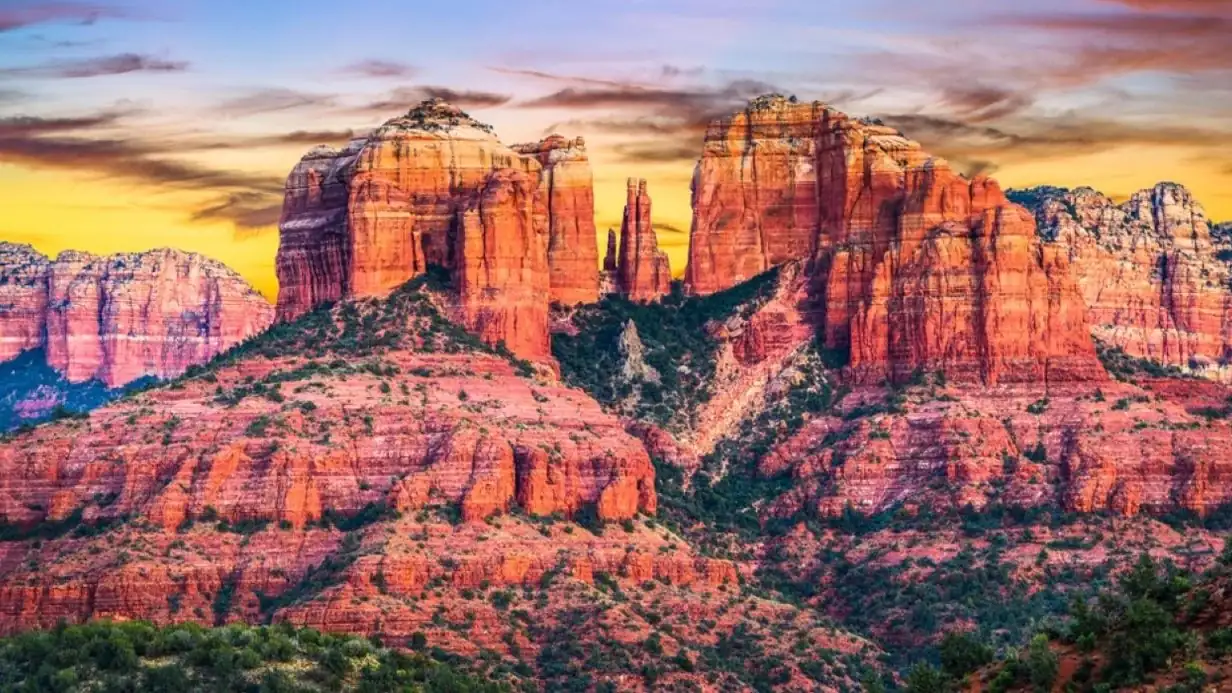
The trade-offs are price and logistics. Lodging runs at a premium year-round and spikes in spring and fall; restaurants follow. And the Grand Canyon from Sedona is a long day — entirely doable with our one-day Grand Canyon plan, but a 4-to-5-hour round trip you'll feel. Choose Sedona when Sedona itself, plus day trips, is the trip. The month-by-month timing is in our best time to visit Sedona guide.
[AFFILIATE: hotels in Sedona]
The case for Flagstaff
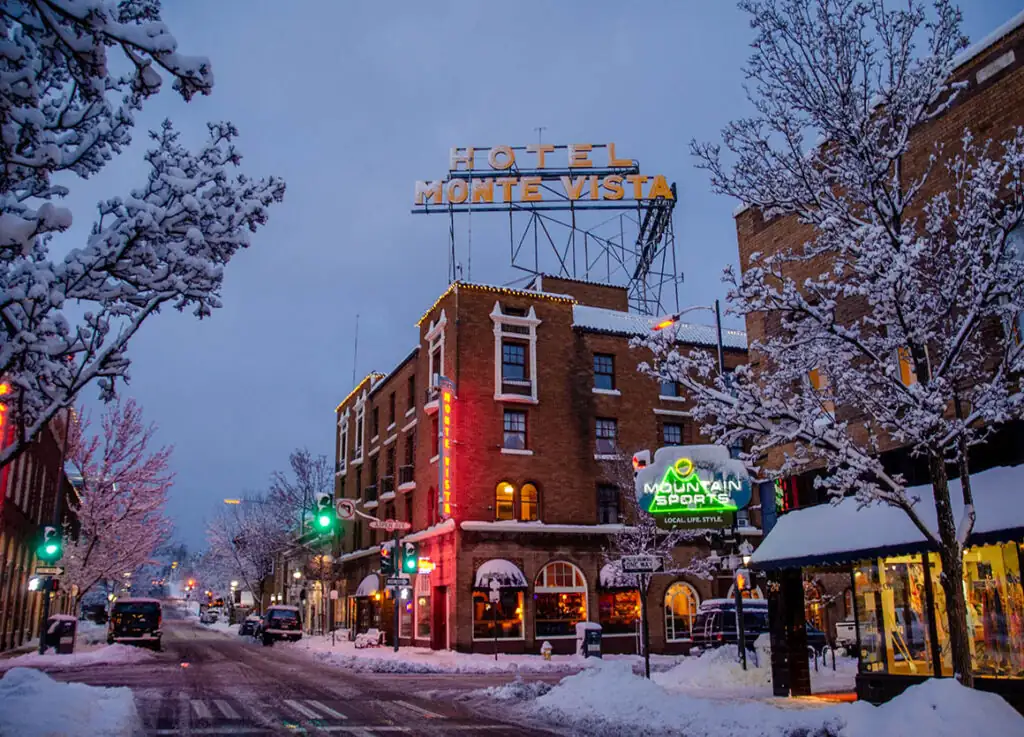
Flagstaff's argument is everything Sedona isn't: a genuine town at 7,000 feet in the ponderosa pines, with a university, a railroad, a walkable Route 66 downtown of breweries and bookstores — and prices set by people who live there. It's also simply closer to the canyon's South Rim, close enough that a rim sunrise or a second canyon day stops being heroic. Our Flagstaff guide covers the town in full.
Flagstaff is also the four-season play. Summer means escaping the desert floor into 80-degree afternoons. Winter means actual winter — the town averages around 90 inches of snow a year, Arizona Snowbowl's lifts spin on the Peaks above town, and the dark-sky heritage (Flagstaff was the world's first International Dark Sky City) makes winter stargazing superb. The costs of all that altitude: real winter driving, colder nights in every month, and scenery that works at landscape scale rather than Sedona's in-your-face intimacy.
[AFFILIATE: hotels in Flagstaff]
The split-stay answer
For trips of four nights or more, the locals' answer is both. The towns are linked by one of America's great short drives — Highway 89A through Oak Creek Canyon, about 30 miles of creekside switchbacks — and each town covers the other's weakness. A proven split: two or three nights in Sedona for the red rocks, the creek and the splurge dinners, then one or two nights in Flagstaff as the Grand Canyon basecamp, from which the canyon is an easy early start. Reverse the order and the canyon comes first, with Sedona as the warm reward. The full regional loop that strings both together is our 7-day Arizona road trip.
The verdict, by traveler
- Grand Canyon is the main event: Flagstaff. The 1.5-hour drive, twice, beats Sedona's 2.5 — and buys you a margin for sunrise.
- Honeymoon or splurge weekend: Sedona, and it isn't close.
- Family on a budget: Flagstaff — bigger rooms for less, more casual food, and the canyon closer. Add one Sedona day trip.
- Summer trip: Flagstaff basecamp, Sedona as a dawn day trip before the heat builds.
- Winter trip: Sedona for hiking weather; Flagstaff if skiing is the point — or split it and do both in one week, as our Arizona in January guide lays out.
- Hikers and photographers: Sedona, with Flagstaff's alpine trails (and the Peaks) as a change-of-pace day.
About & Disclosure
TRVL Guide is a travel resource site. Some links on this site may be affiliate links — if you book through them, we may earn a commission at no extra cost to you. It helps keep the guides free.