Do
WHERE TO STAY IN FLAGSTAFF
Flagstaff is small enough that no area is far from downtown, but the areas feel very different, and at 7,000 feet the wrong base on a storm morning costs you the day. Walkable downtown, practical Milton Road, highway easy east side, ski first Highway 180, a resort in its own pine forest, cabins, and Williams for price relief. Planning ranges labeled, no invented hotel rates.
This is the lodging layer for our Things to Do in Flagstaff hub and its winter companion, Flagstaff in Winter. Seven bases, what each feels like, the drives that matter, and the two honest warnings every Flagstaff stay needs: the trains downtown, and the snow everywhere. Facts were checked against official sources on November 20, 2026. Every dollar figure is a planning range for a standard room for two, before taxes and fees, not a quote.
Flagstaff at a glance
Elevation: about 7,000 feet. Weather (NOAA normals): December high 43.0 and low 16.9, about 18.5 inches of snow in December and about 90 inches a year. Snowbowl: about 14 miles and half an hour from downtown, open for the season since Nov 19, 2026. Grand Canyon South Rim: about 81 miles and 1.5 hours. Sedona: via I-17 and SR 179 only this winter, about 55 to 60 miles, because SR 89A is closed at the top of Oak Creek Canyon. The airport: Flagstaff Pulliam (FLG), about 5 miles south of downtown, limited regional service; most visitors fly to Phoenix and drive.
1. Downtown and the historic district: walkable, historic, and honest about trains
The compact grid around Heritage Square, Aspen Avenue and San Francisco Street is the only Flagstaff base where you park once and walk to dinner, shops and the depot. It is the best first timer base, the best short stay, and the only one that works well without a car for town itself, since Amtrak's Southwest Chief serves the downtown depot. The anchor is the Hotel Monte Vista, 100 N. San Francisco St., opened January 1, 1927 and confirmed open on its official site, heading into its centennial at the turn of 2027; its own site notes busy season May through October, higher Friday, Saturday and holiday rates, and limited parking. Now the warning, printed plainly: the BNSF main line runs directly through downtown, and BNSF describes this section as seeing about 100 trains a day. A downtown quiet zone cuts horn noise at the main crossings. It does not cut rumble. Light sleepers should ask for a room away from the tracks, higher up, on the north side where possible, or pick a base below. Older historic rooms also vary a lot in size. Band: mid to higher end, the top of the market on event and holiday weekends.
2. South side and Milton Road: the practical chain corridor
Milton Road is the approach from I-17, running past Northern Arizona University with a long strip of chain hotels and services. Predictable standards, parking on site, and the easiest arrival from Phoenix in town. The anchor is the Drury Plaza Hotel Flagstaff, 300 S. Milton Rd., on the NAU campus next to the High Country Conference Center; note the current name is Plaza, whatever older listings say. The north end of the corridor walks to campus and nearly to downtown; the south end is a highway strip that needs a car for dinner. NAU is the demand story here: move in, family weekends and the May and December commencements fill this corridor first and push prices hardest. The trade is character: Milton Road is a busy arterial, not a stroll, and rooms facing it hear it. Band: budget to mid for most of the strip, higher end for the campus anchor. Best for NAU visits, road trippers off I-17, and anyone who wants a known chain and an easy lot.
3. The east side, I-40 and Country Club: the road trip base
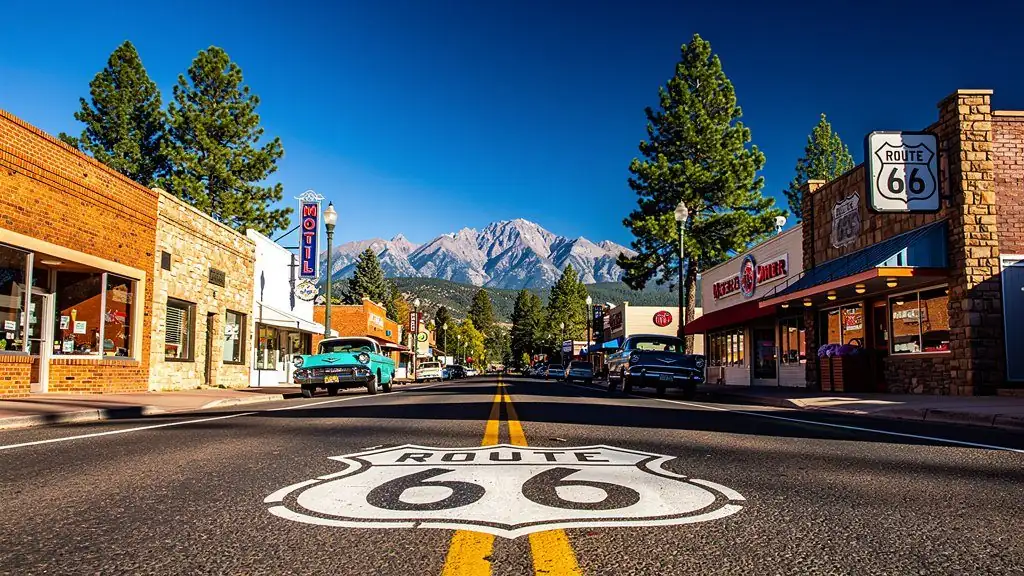
Along East Route 66, Butler Avenue and Country Club Drive near the I-40 exits, lodging is highway oriented chains and motels with room to park and the fastest exits in every direction: Walnut Canyon National Monument about 10 miles east, I-40 eastbound for Winslow and Petrified Forest, and US 89 north for Sunset Crater (about 30 minutes) and Wupatki (45 to 60 minutes). Downtown is still only about 10 to 15 minutes west in normal traffic. The trades: this is a drive everywhere area with the least walkable dining in town, and rooms backing onto I-40 trade downtown's train rumble for truck noise. Band: budget to mid. Best for road trippers, eastbound and northbound day trips, and travelers who value parking and highway access over neighborhood feel.
4. Highway 180 and Fort Valley: ski first, supply thin
Northwest on US 180 toward the San Francisco Peaks, past the Museum of Northern Arizona at 3101 N. Fort Valley Rd., the lodging thins to cabins, lodges, rentals and one resort run property: Basecamp at Snowbowl, at the base of Snowbowl Road, about 7 miles from the slopes, described by Snowbowl as the closest lodging to the resort. Its posted offer, rechecked today on snowbowl.ski, is two free lift tickets for each night you stay in winter; the current season end date for that offer was not posted on the pages we checked, so confirm it for your dates when you book direct. This base wins powder mornings and loses on dining: few walkable restaurants, a dark two lane highway at night, and the most snow exposed drive in town. Book it early for ski weekends, because there is not much of it. Band: mid to higher end, with the lift ticket bundle changing the math in ski season.
5. Little America: a resort in its own forest
Treat Little America Hotel Flagstaff, 2515 E. Butler Ave., as its own anchor rather than part of the east side strip: a full service hotel in its own 500 acres of ponderosa pines per its official site, with a private nature trail and forest view rooms, minutes from downtown by car and visually a world away from the highway corridors. Families love it, road trippers who want space love it, and in December it is the departure point for the North Pole Experience, running Nov 20 to Dec 24, 2026 per the hotel, which sells this property out on family weekends even when the rest of town has rooms. It is not walkable to downtown. That is the whole trade. Band: higher end. Best for families, holiday stays, and anyone who wants one self contained base in the pines. Our North Pole Experience guide covers the December program in full.
6. Cabins and vacation rentals: the group pattern
Flagstaff's rental pattern spreads through the pines: Cheshire and Coconino Estates north of downtown, the Fort Valley corridor, Kachina Village and Mountainaire south on I-17, Doney Park east. Kitchens, multiple bedrooms, fireplaces and hot tubs are the selling points, and per stay cleaning fees make one night stays poor value against a hotel; three nights with a group splitting bedrooms is where rentals win. Quality and snow clearing vary house by house because there is no front desk, and a rental listed as Flagstaff can sit 20 to 30 minutes from downtown. Before you book a winter cabin, confirm who clears the driveway, whether the road is county maintained, and the host's storm plan. A cabin is the worst place in town to be underprepared in a storm. Band: every band, judged on the total with fees, never the nightly headline.
7. Williams: the price relief base
About 34 to 35 miles and 35 minutes west on I-40, Williams is a historic Route 66 town with a deep strip of motels built for Grand Canyon traffic, and on Flagstaff's peak dates a comparable room there often plans one band lower. It is also a destination in its own right: the Grand Canyon Railway runs daily from Williams to the South Rim, about 65 miles and 2 hours 15 minutes each way, and our Polar Express guide covers its holiday season. The trades are printed plainly: 35 minutes back to Flagstaff every time you want its dining, NAU or Snowbowl, the same BNSF line runs through Williams so trackside motels hear trains too, and on quiet Flagstaff dates the saving shrinks until the drive is not worth it. Band: budget to mid in most seasons.
The money, in planning ranges, and the winter rules
Quiet shoulder midweeks: budget about $80 to $130, mid range $130 to $200, higher end $200 to $300. Regular summer, fall and ski weekends: budget $110 to $170, mid $170 to $260, higher end $260 to $400. Peak dates (Christmas to New Year, holiday ski weekends, NAU commencement and move in, major event weekends): budget $150 to $220, mid $240 to $380, higher end past $400, with whole homes above that once fees land. Planning ranges only, for a standard room for two before taxes and fees. Winter rules: check az511.gov before any drive, keep the tank three quarters full, carry ADOT's kit (water, blankets, warm clothes, charged phone, ice scraper, shovel, battery cables), stay four car lengths behind plows and never pass one, and build a flexible day into the trip, because I-17 and I-40 both close in major storms. And the Sedona note again, because it decides bases this winter: SR 89A is closed from about milepost 387 to Oak Creek Vista with no estimated completion per ADOT, so Flagstaff to Sedona runs via I-17 and SR 179 until ADOT says otherwise.
About & Disclosure
TRVL Guide is a travel resource site. Some links on this site may be affiliate links. If you book through them, we may earn a commission at no extra cost to you. It helps keep the guides free.
Filed under Do. Every hub, hike, tour, event and itinerary on trvlguide lives on the Do shelf, next to Eat and See.
The trvlguide letter
Flagstaff, sorted by base. Tucson was the other half.
One email a week in season: new guides, event weekends and the desert windows worth planning around, from Phoenix to Sedona to the Grand Canyon. Free, no spam.
Enter your email to join free: