The most photogenic plant on Earth
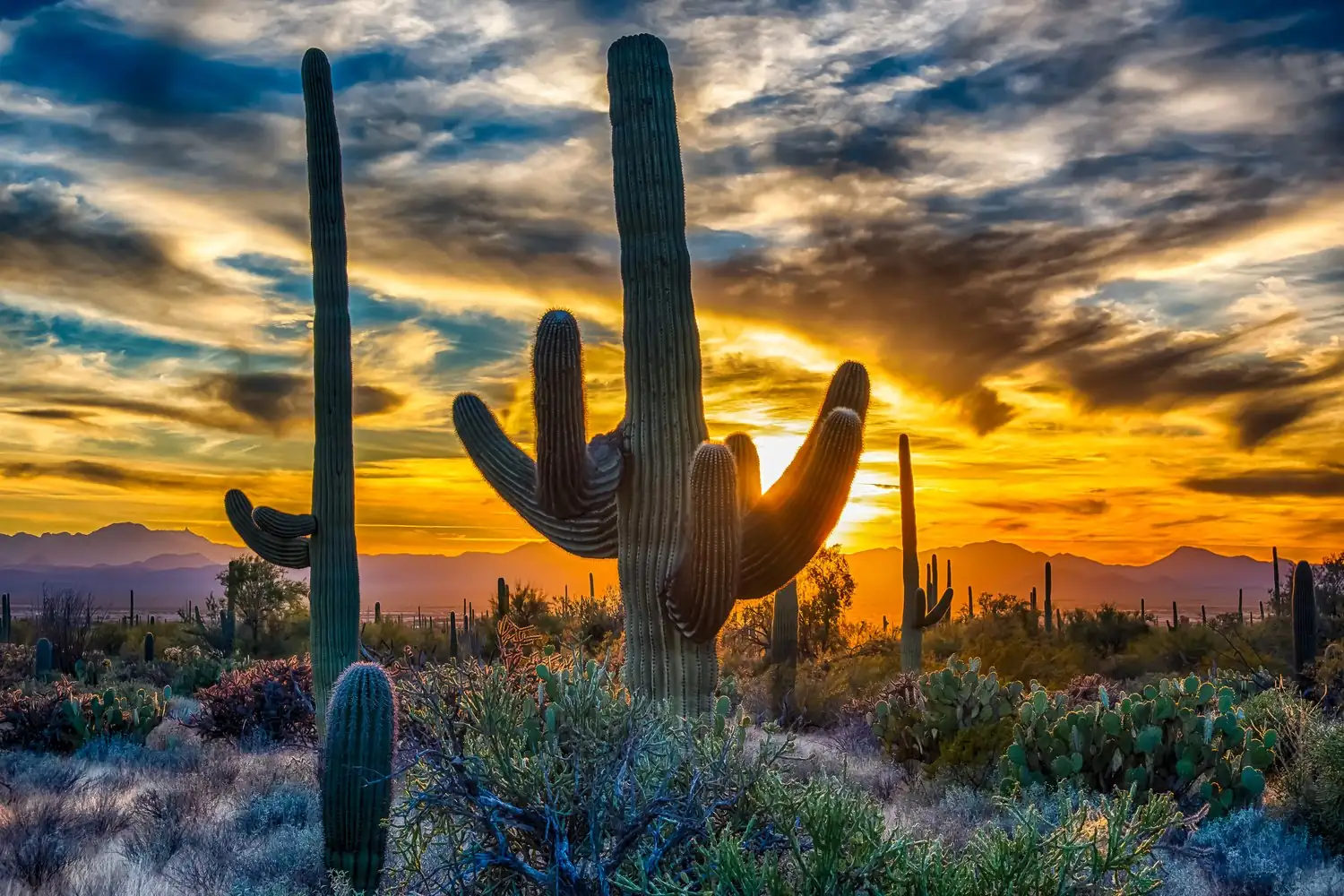
A saguaro grows an inch a year in its youth, raises its first arm at fifty or seventy, and can stand for two centuries — every giant you photograph is older than the state it's in. They grow wild only in the Sonoran Desert, which makes Tucson and Phoenix the world capitals of a single subject: that silhouette. The craft is simple to learn and hard to leave — find a characterful giant, put the sun behind it, and let the sky perform.
[AFFILIATE: hotels in Tucson] · [AFFILIATE: Saguaro National Park tours]
Tucson: two districts, two moods
Tucson Mountain District (west)
The sunset district. The saguaros here grow dense on rocky bajadas, and the light is unobstructed all the way to the horizon. Work the Bajada Loop Drive for roadside giants, then finish at Gates Pass, the famous overlook above the Tucson Mountains, where the whole valley ignites at dusk — arrive early on weekends; everyone in Tucson has the same idea. The nearby Arizona-Sonora Desert Museum doubles as a scouting trip: native plants composed like a botanical studio.
Rincon Mountain District (east)
The sunrise district — older, taller forest against the Rincon Mountains, quieter trails, and the Cactus Forest Loop Drive for morning light raking across the arms. Saguaros here grow in a greener, grassier desert that photographs beautifully after wet winters.
The Phoenix side
You don't have to reach Tucson. The McDowell Sonoran Preserve in Scottsdale holds classic saguaro stands against granite boulders, an easy golden-hour session from any Valley hotel. East of Mesa, the Superstition Mountains rise behind fields of saguaros along the Apache Trail and at Lost Dutchman State Park — the single most dramatic desert backdrop in the Phoenix area, and at its best when winter storms clear at sunset.
[AFFILIATE: hotels in Scottsdale] · [AFFILIATE: Superstition Mountains tours]
Monsoon: drama season
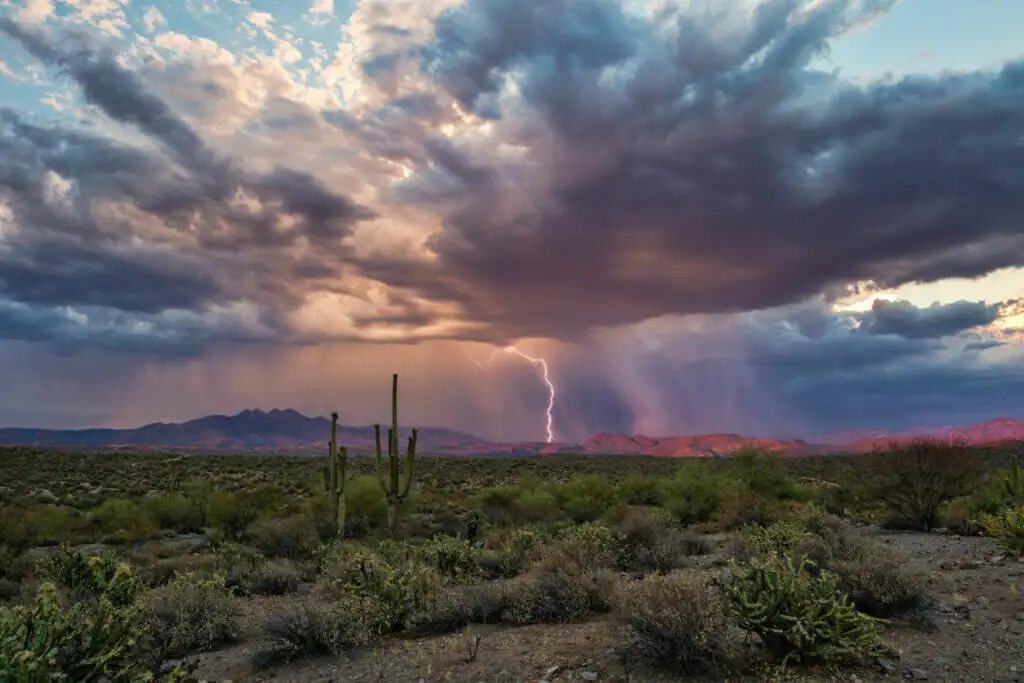
From roughly July through mid-September, the desert runs a nightly lottery. Afternoons build towering thunderheads over the mountains; evenings can deliver the full show — lightning, rain veils, double rainbows, and a sunset firing underneath the storm's edge. It's the most spectacular photography in the Sonoran year and it demands respect: photograph storms from a safe vantage with shelter or a vehicle at hand, never from an exposed ridge, and never cross a flooded wash to reach a viewpoint. When a storm clears at dusk, stay. The light after is the shot.
Seasons & technique
- Bloom: Saguaros flower in May and June — Arizona's state flower, opening at night and wilting by midday. Shoot at dawn, when the crowns hold fresh white blooms against first light.
- Spring (Feb–Apr): Wildflower carpets in wet years — brittlebush gold, lupine, Mexican poppies — with the saguaros standing over all of it.
- Backlight is the move: A low sun behind a saguaro rims every spine in gold. Cholla cactus does it better than anything — a "jumping cholla" glowing at sunset looks lit from inside. Watch where you step to get it: cholla joints detach at a touch, exactly as advertised.
- Underexpose slightly for sunsets to hold the sky's color and let the giants go full silhouette; bracket when clouds are moving.
[AFFILIATE: Tucson photography tours] · [AFFILIATE: rental cars in Tucson]
Field notes
- Saguaro National Park requires an entrance pass — check current fees and hours before you go, and note the two districts sit on opposite sides of Tucson, about an hour apart. You can't do both in one golden hour; pick your light and commit.
- The desert floor is fragile and the plants are protected — stay on trails and roadsides, never move rocks or props, and give every cactus its space for your skin's sake as much as theirs.
- Summer heat is a genuine hazard: shoot at the day's edges, carry water even for a "quick" roadside stop, and tell someone your plan for remote pullouts.
Keep reading
Shoot the desert after dark, too: our Arizona dark skies guide covers saguaro silhouettes under the Milky Way. For red rock instead of cactus, our Sedona photography guide is the northern companion.
About & Disclosure
TRVL Guide is a travel resource site. Some links on this site may be affiliate links — if you book through them, we may earn a commission at no extra cost to you. It helps keep the guides free.