Do
WHERE TO STAY IN TUCSON
Tucson is a desert city ringed by mountains, and its lodging splits into very different bases. Downtown walks. The foothills sprawl in resort quiet. The west side wakes up next to the Desert Museum. Pick the base by the days you plan, not by a star rating. Price bands in words, planning ranges labeled, no invented hotel rates.
This is the lodging layer for our Things to Do in Tucson hub: eight bases, what each one actually feels like, what it costs in planning terms, and the drives that decide your mornings. Tucson has no freeway across its middle, so east to west drives run on surface avenues and take longer than the miles suggest. Facts and patterns below were checked against official sources on November 20, 2026. Every dollar figure is a planning range for a standard room for two, before taxes, resort charges and parking, not a quote for any property or date.
Tucson at a glance
Walkable: downtown, Congress Street, Fourth Avenue and the University area, tied together by the free Sun Link streetcar. Resort country: the Catalina Foothills along Campbell, Skyline and Sunrise, plus Starr Pass on the west side and Dove Mountain in Marana. The desert drives: Saguaro East is about 30 to 35 minutes from downtown, Saguaro West about 30 to 40, the Desert Museum about 25 to 35, and Sabino Canyon about 25 to 30. The season: winter is peak, the Gem Show (Jan 27 to Feb 14, 2027) is the spike, and summer is the bargain with 100 degree days attached. The weather (NOAA normals): December high 66, low 41; January 67 and 41; February 69 and 43.
1. Downtown, Congress Street and Fourth Avenue: the walkable base
The historic center is the only Tucson base where the trip runs on foot. Congress Street, the Presidio, Barrio Viejo's adobe streets and the Warehouse Arts District sit in a compact grid, with the Fox Tucson Theatre, the Rialto, the Tucson Museum of Art and the Presidio museum all close. Fourth Avenue, just north, is independent and a little scruffy in a good way: vintage shops, bookstores and small restaurants along the streetcar line. The anchor is Hotel Congress, 311 E. Congress St., a family owned historic hotel built in 1919 with live music most nights, confirmed open on its official site. That music is the honest trade: this is the liveliest and noisiest base at night, historic rooms run smaller, pools are small or absent, and parking is garages and meters, not a free lot at your door. Park Tucson runs more than 3,000 covered garage spaces downtown; meters were $1.50 an hour, Monday to Saturday 8 a.m. to 7 p.m., free after 7 p.m. and Sundays, per the city. Band: mid, with a few upper and budget options at the edges. Best for first timers without a resort agenda, food focused trips, and Gem Show visitors who want to walk to the convention center shows.
2. The University area and Sam Hughes: campus energy, calmer streets
Main Gate Square, at Park Avenue and University Boulevard, is the two block dining strip at the campus west gate, and the streetcar runs straight through it. West University's bungalow streets sit between downtown and campus, and Sam Hughes, east of campus across Campbell, is the quiet residential version, early 1900s homes on tree lined streets. The anchor here is the Arizona Inn, 2200 E. Elm St., casita style rooms across garden grounds, confirmed open, about a mile from the university area and roughly 3 miles from downtown per its own pages. Campus museums, the Arizona State Museum among them, sit a streetcar ride away. The catch is the campus calendar: move in, family weekend and graduation weekends push prices up and rooms out, so ask what is on before you book. Band: budget to mid for most options, upper for the Arizona Inn. Best for campus visits, museum days, and anyone who wants the streetcar with a calmer base than Congress Street.
3. Midtown: the practical middle
Midtown is not a postcard, and that is its use. Broad avenues, Reid Park and its zoo, the Botanical Gardens side of town, and everyday restaurants along Broadway, Speedway and Campbell. Lodging is a mix of chains, inns and rentals rather than a resort corridor. From here every direction is a reasonable drive: downtown west, Sabino Canyon northeast, Saguaro East southeast, the airport south. Almost nothing is walkable in a vacation sense, and character varies block by block, so check the exact address rather than the midtown label. Band: budget to mid, with the Arizona Inn at upper on its west edge. Best for longer stays, families who want space, and drivers running a different direction each day at lower planning costs than the foothills.
4. The Catalina Foothills: the resort corridor
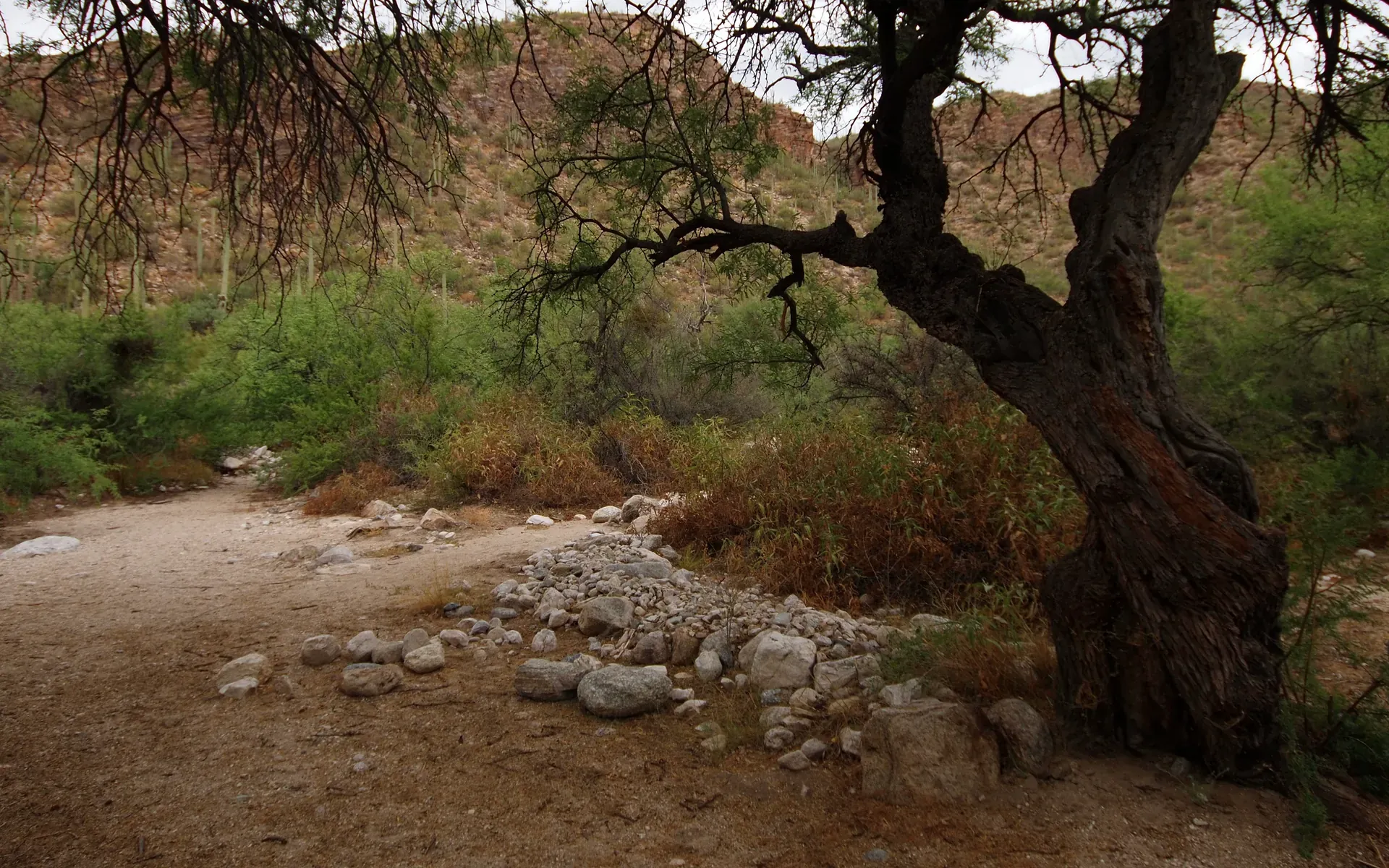
North of River Road, the foothills climb the south slopes of the Santa Catalinas, and this is the Tucson most visitors picture: saguaros on the ridgelines, mountain views one way and city lights the other, La Encantada and St. Philip's Plaza for shopping and dinner. The anchors are the big resorts along the Skyline, Campbell and Sunrise corridor, Westin La Paloma and Loews Ventana Canyon among them, plus Hacienda Del Sol, the historic guest ranch inn on the corridor's west end, all confirmed open on their official sites. Sabino Canyon is the eastern backyard, about 25 to 30 minutes from downtown and closer from here. The honest trade: there is no walkable center, everything is a drive, downtown is 20 to 25 minutes, Saguaro West and the Desert Museum are 40 to 50 minutes across town, and resort charges plus paid parking at some properties add to the room price. Band: upper to resort, the highest planning costs in the metro, especially in winter. Best for resort stays, pool and spa days, golf, and winter trips where the hotel itself is half the trip.
5. The east side and Tanque Verde: the hiking base
The east side trades dining depth for trail access. Saguaro National Park East, at 3693 S. Old Spanish Trail, is the close neighbor here, with the Cactus Forest Drive and trailheads like Douglas Spring at the end of Speedway. Tanque Verde, the northeast ranch country along the road of the same name, adds guest ranch style stays and quiet. Downtown is about 30 minutes west, Sabino Canyon about 20 minutes north, and the planning costs sit well below the foothills for similar desert at your door. The trade is real: restaurants thin out, and Saguaro West is a 45 to 60 minute cross town drive. Band: budget to mid. Best for hiking first trips, Saguaro East regulars, and anyone whose Tucson is sunrise trails rather than evenings out. Our Tucson and Saguaro weekend guide runs the east and west split day by day.
6. The west side and Starr Pass: Desert Museum country
West of the Santa Cruz, the city gives way to the Tucson Mountains, and the base here exists for three stops: Saguaro National Park West at 2700 N. Kinney Rd., the Arizona-Sonora Desert Museum at 2021 N. Kinney Rd., about a mile before the park junction per the Park Service, and Old Tucson beyond it. The anchor is the JW Marriott Starr Pass, set in the hills above the west side, confirmed open on its official site. Supply is thin compared with the east side, a handful of properties rather than a strip, so book this base early in winter. One flag in the honest spirit of this guide: the resort's official pages carried a pool refresh notice in November 2026, so confirm the current pool status for your dates before you book a pool led stay. Gates Pass, the scenic way over the mountains from downtown, has Park Service noted vehicle limits, and the flat way around via I-19 and Ajo Way is the safer bet for big vehicles. Band: mid to resort. Best for Desert Museum days, Saguaro West sunsets, and trips pairing Tucson with Old Tucson.
7. The south side and the airport: the practical stop
Tucson International, TUS, sits about 8 miles and 15 to 20 minutes south of downtown, and the lodging around it and along I-10 and I-19 is built for early flights, road trip nights and lower planning costs. It does the job honestly: known chains, parking at the door, a straight shot to the airport, and downtown close enough for dinner the night before. What it is not is a base for a desert trip; every sight in this guide is a drive north from here. Band: budget to mid. Best for one night stops, early departures, and travelers spending their money on the trip instead of the room.
8. Oro Valley and Marana: the quiet northwest
Up Oracle Road, Oro Valley and Marana trade Tucson's center for space, mountain views against the Catalinas and Tortolitas, and resort calm. The anchors are El Conquistador Tucson in Oro Valley and The Ritz-Carlton, Dove Mountain in Marana, both confirmed open. Golf and quiet are the products here. The trade is distance, printed plainly: downtown is roughly 25 to 40 minutes from Oro Valley and 30 to 45 from Dove Mountain, Saguaro East and Sabino Canyon are cross metro drives from Marana, and there is no streetcar day from here, so plan on a car for everything. Band: mid to resort. Best for golfers, quiet seekers, and repeat visitors who have already done downtown.
The money, in planning ranges
Winter peak, roughly late December through March: budget areas plan around $85 to $150 a night, mid around $140 to $240, upper around $220 to $380, and the resort band around $300 to $550 plus resort charges and parking where charged. Summer low, late May through September: budget $55 to $95, mid $85 to $150, upper $130 to $230, resort $160 to $300 plus charges. The Gem Show spike, January 27 to February 14, 2027, sits on top of the winter ranges and sells out the downtown and convention center weekends first. These are planning ranges for a standard room for two before taxes and fees, drawn from the seasonal pattern, not quotes. Check your exact dates live, and compare the total with parking and resort charges included, because downtown garages and foothills resorts bill those very differently.
Whichever base you pick, plan the Tucson days from it with the Things to Do in Tucson hub, time the desert days with Tucson in February or Tucson in March, and if the Gem Show is your reason, start with the Gem Show first-timer's guide.
About & Disclosure
TRVL Guide is a travel resource site. Some links on this site may be affiliate links. If you book through them, we may earn a commission at no extra cost to you. It helps keep the guides free.
Filed under Do. Every hub, hike, tour, event and itinerary on trvlguide lives on the Do shelf, next to Eat and See.
The trvlguide letter
Tucson, sorted by base. Flagstaff is the other half.
One email a week in season: new guides, event weekends and the desert windows worth planning around, from Phoenix to Sedona to the Grand Canyon. Free, no spam.
Enter your email to join free: