Why the canyon humbles cameras
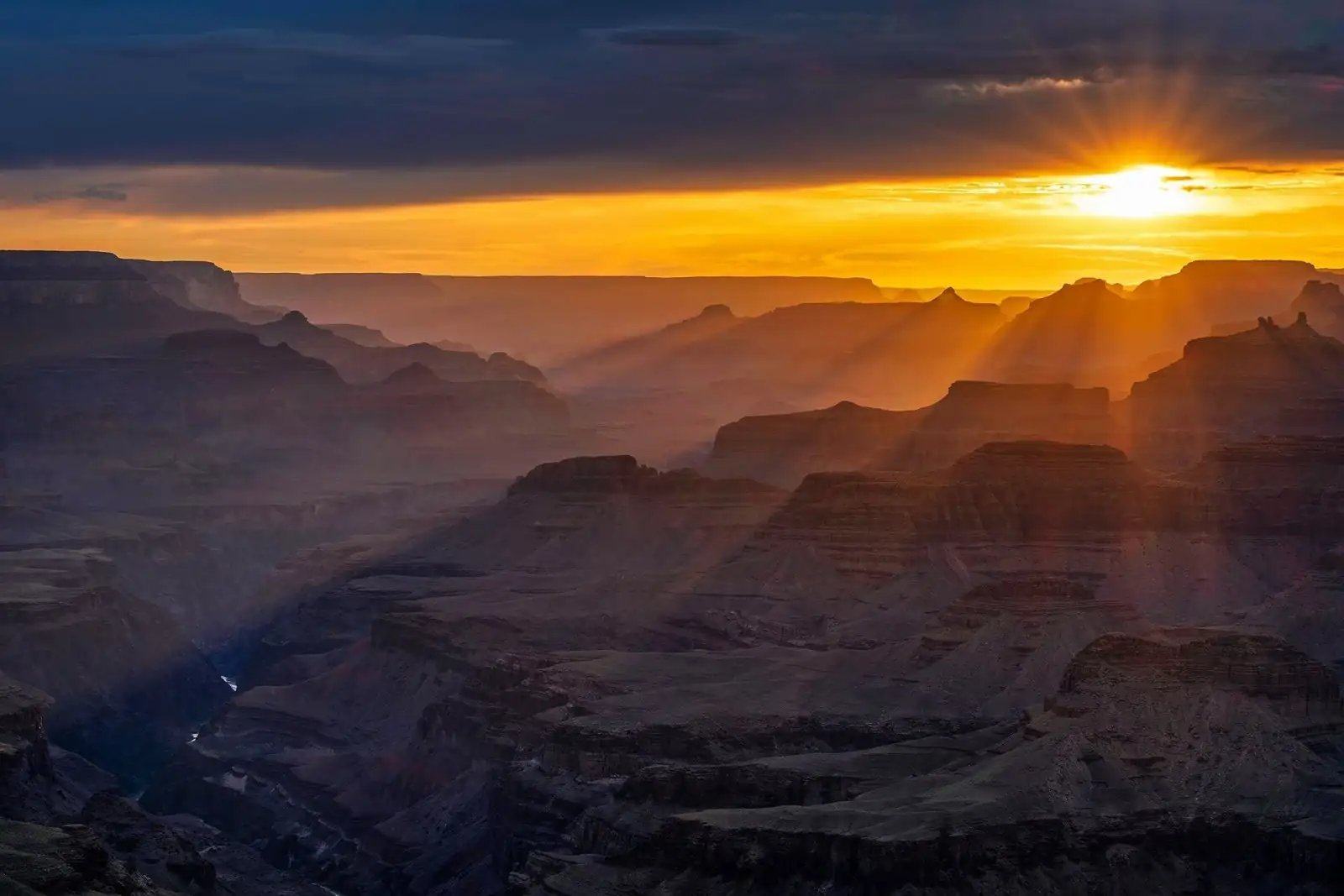
Midday at the Grand Canyon is a postcard seen through haze: the distance flattens, the colors bleach, and every layer of rock reads the same pale red. But give it a low sun, a passing storm, or fresh snow, and the canyon becomes the most dramatic landscape in North America — strata igniting one by one, shadows carving depth you can measure in miles. Everything below is about being at the rim when those moments happen.
Sunrise: east rim light
Mather Point
The classic for a reason — a broad amphitheater view a short walk from the visitor center, facing the sunrise down the length of the canyon. Arrive in the dark, claim a spot on the rocks away from the rail, and watch the light walk down the temples. On cold mornings, an inversion sometimes fills the canyon with cloud, and the viewpoints above it become islands — the single most coveted condition in canyon photography.
Yaki Point
Accessible by the free shuttle (private cars aren't allowed), Yaki faces east toward the sunrise and draws a fraction of Mather's crowd. The South Kaibab trailhead is here too — shoot dawn at the rim, then drop below it while the light is still young.
[AFFILIATE: Grand Canyon sunrise tours] · [AFFILIATE: hotels at the Grand Canyon]
Sunset: the west light show
Hopi Point
The sunset headquarters on Hermit Road, with a panoramic bend of the Colorado River below. Hopi juts further into the canyon than its neighbors, so it catches light from both sides — and crowds to match. Walk a few minutes along the Rim Trail in either direction and you'll often have an un-named outcrop to yourself.
Lipan Point & Desert View
On the east road, Lipan Point offers the widest river view on the South Rim — the canyon, the Painted Desert, and the river's big bend in one frame, superb at both ends of the day. Finish at the Desert View Watchtower, Mary Colter's 1932 stone tower, which photographs beautifully in last light and adds a human silhouette to the scale.
Storm light: the photographer's jackpot
Summer monsoon (roughly July to mid-September) turns the canyon theatrical: isolated storms drag veils of rain across the chasm while sun breaks light a single temple. Shoot from a covered or vehicle-adjacent viewpoint, never exposed on the rim during lightning, and keep shooting after the storm passes — rainbows and god-rays are the standard sequel. Winter brings the opposite drama: snow lines drawn precisely along the strata, gone by noon. In both seasons, the ten minutes after bad weather beats a month of clear skies.
Below the rim: small human, vast canyon
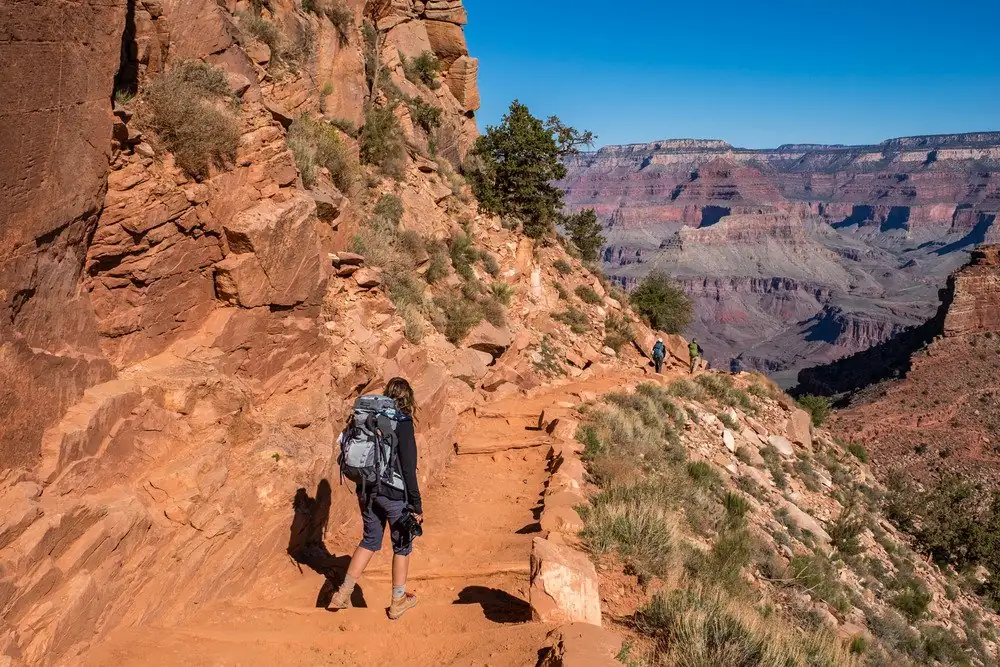
The signature adventure frame — a lone hiker against a mile of geology — is made below the rim. On the South Kaibab Trail, Ooh Aah Point (under a mile down) and Cedar Ridge (about 1.5 miles) open huge panoramas with the trail itself as a leading line. On the Bright Angel Trail, the two tunnels in the first mile and a half make perfect natural frames. Golden hour light reaches the upper trails early and late; by mid-morning they're in full sun. Remember the canyon's arithmetic: down is optional, up is mandatory, and it takes roughly twice as long to climb out as to descend. Carry more water than you think, and check current trail conditions before you go.
[AFFILIATE: Grand Canyon guided hiking tours] · [AFFILIATE: Grand Canyon helicopter tours]
Field logistics
- The free shuttle system covers the main viewpoints — Hermit Road is shuttle-only most of the year; check current routes and seasonal road rules before planning a driving itinerary.
- Tripods are welcome at rim viewpoints; arrive well before sunrise or sunset for rail space, and keep gear clear of the Rim Trail's foot traffic.
- Haze is the enemy at midday: a polarizer helps marginally, but the real fixes are shooting early, shooting after storms, and using a telephoto to isolate lit sections instead of fighting the whole vista.
- Stay at the rim if you can — dawn patrol from a lodge inside the park beats a pre-dawn drive from Flagstaff or Williams, though both make workable bases in summer.
[AFFILIATE: hotels in Flagstaff] · [AFFILIATE: hotels in Williams]
Keep reading
The canyon after dark is its own reward — our Arizona dark skies guide covers the South Rim's night-sky season, moon timing, and settings.
About & Disclosure
TRVL Guide is a travel resource site. Some links on this site may be affiliate links — if you book through them, we may earn a commission at no extra cost to you. It helps keep the guides free.