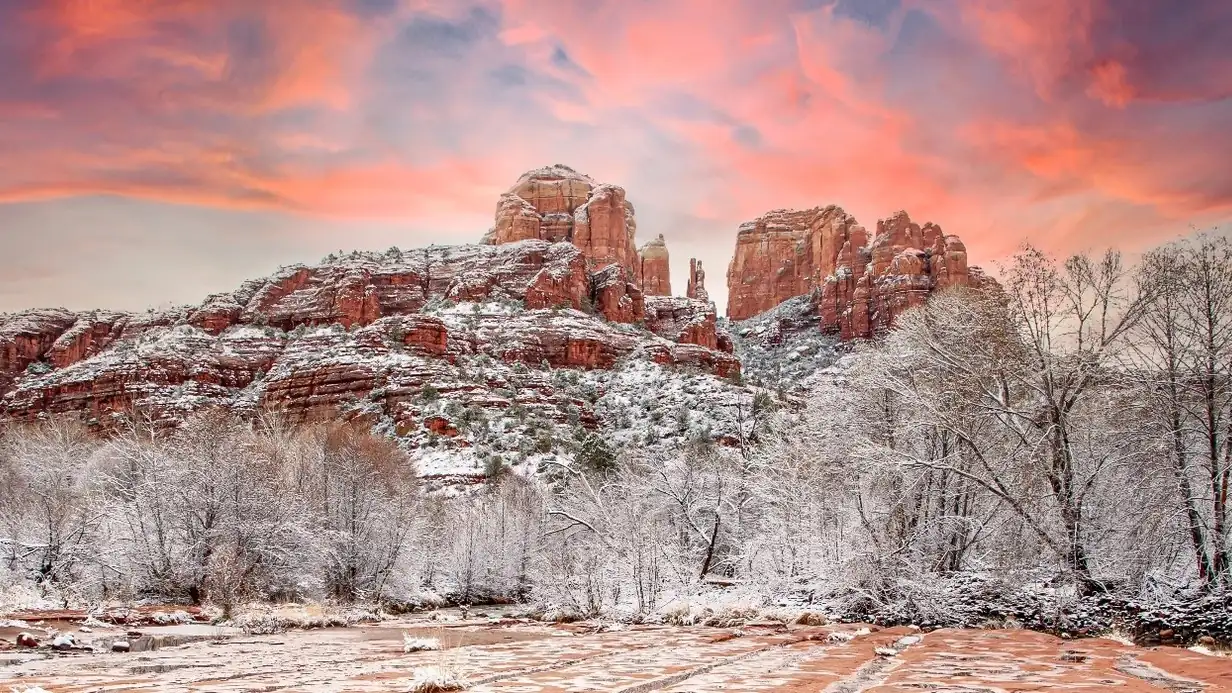
The short answer: the best time to visit Sedona is spring (March through May) and fall (September through November), when average highs sit between the mid-60s and low 80s, the trails are at their best, and the light does what the postcards promise. If you want one month above all others, take October — warm days, cool nights, thinning crowds, and the start of fall color in Oak Creek Canyon.
But "best" hides a trade. Sedona's peak months are also its most crowded and most expensive, and its off months are not consolation prizes: January gives you empty trails and the chance of snow on the red rocks, and July gives you swimming holes and afternoon thunderheads. Sedona sits at about 4,300 feet — high enough to run 15 to 20 degrees cooler than Phoenix, low enough that winter stays mild by mountain-town standards. Here is the whole year, honestly, using long-term average temperatures.
Sedona weather by month
| Month | Avg high | Avg low | Avg rain | The feel |
|---|---|---|---|---|
| January | 56°F | 31°F | 2.1 in | Quietest month. Crisp hikes, cold nights, occasional snow dusting the rocks. |
| February | 61°F | 33°F | 2.2 in | Still quiet, warming up. Film festival in late February fills town for a week. |
| March | 65°F | 37°F | 2.5 in | Spring break crowds arrive; wildflowers in a wet year. Book everything early. |
| April | 73°F | 42°F | 1.1 in | Prime hiking. Arguably the single best month — and priced like it. |
| May | 82°F | 49°F | 0.7 in | Warm, dry, long days. Trails busy but manageable on weekdays. |
| June | 93°F | 58°F | 0.4 in | Hot and bone dry. Dawn hiking, midday shade, Oak Creek swimming. |
| July | 97°F | 64°F | 1.7 in | Hottest month; monsoon storms build most afternoons. Dramatic skies, real flood risk in slot-like washes. |
| August | 94°F | 63°F | 1.9 in | Monsoon continues. Lush desert, waterfalls after rain, hotel deals. |
| September | 88°F | 58°F | 1.9 in | Storms taper off late month; heat breaks. A connoisseur's shoulder month. |
| October | 77°F | 48°F | 1.7 in | The other prime month. Golden light, fall color starting in the canyon. |
| November | 64°F | 36°F | 1.4 in | Crisp and calm after mid-month; Thanksgiving week is the exception. |
| December | 57°F | 31°F | 1.5 in | Holiday lights, cold nights, empty trailheads between the holidays. |
Two patterns matter more than any single row. First, Sedona's swing is daily, not just seasonal: a 25-degree gap between afternoon and dawn is normal, so layers beat a heavy coat in every month. Second, the two wet seasons are winter (gentle Pacific storms, December through March) and the summer monsoon — not spring or fall, which are reliably dry. For what to do once you're there, our Sedona weekend guide and best hikes in Sedona are built month-proof.
Spring: March to May
This is Sedona's headline season. Temperatures climb from the mid-60s into the low 80s, the desert blooms in a wet year, and every trail in the red rock trail system is in play all day long. April is the sweet spot of the sweet spot — warm enough for short sleeves on the trail, cool enough to hike at noon.
The cost is company. March brings spring-break crowds and some of the year's tightest trailhead parking; April and May weekends fill the popular lots by mid-morning. Lodging prices peak with the weather. The defense is simple: hike early, choose weekday visits, and stay in West Sedona or the Village of Oak Creek rather than Uptown — our where to stay in Sedona guide breaks down the trade-offs area by area.
[AFFILIATE: hotels in Sedona]
Summer & the monsoon: June to August
June is Sedona at its most extreme and, in its way, most honest: highs in the 90s, almost no rain, and a sun that reorganizes your day around dawn and dusk. Locals hike at sunrise, swim in Oak Creek at midday — Slide Rock and Grasshopper Point earn their keep — and return to the rocks for the evening glow. Do the same and summer works beautifully, with thinner crowds and softer hotel rates.
From mid-June through September, the North American monsoon rewrites the afternoons. Moisture rolls in, thunderheads build over the rim, and short violent storms can drop an inch of rain in an hour — the season the National Weather Service officially brackets from June 15 to September 30. The rewards are real: waterfalls that exist for a day, rainbows over wet red rock, the smell of creosote after rain. So is the hazard: flash floods. Never enter a narrow wash or slot-like drainage when storms are anywhere in the area, never cross a flooded road, and treat a distant rumble as a schedule change, not background music. Photographers, take note — monsoon season is when our Sedona photography guide earns its most dramatic frames.
Fall: September to November
September is two months in one: the first half still runs warm with the monsoon's tail, the second half breaks into the clear, golden weather that makes October famous. By October, highs in the upper 70s and dry air return Sedona to prime condition, and the cottonwoods along Oak Creek begin turning — the canyon's fall color typically builds from late October into November, later than most visitors expect.
Fall crowds are real but gentler than spring's, and they fade fast after October. November is the quiet overachiever: mid-60s highs, cold bright mornings, and trails you can have nearly to yourself outside Thanksgiving week. If your dates are flexible and your budget isn't unlimited, a mid-November weekday trip is one of the best value plays in Arizona travel.
Winter: December to February
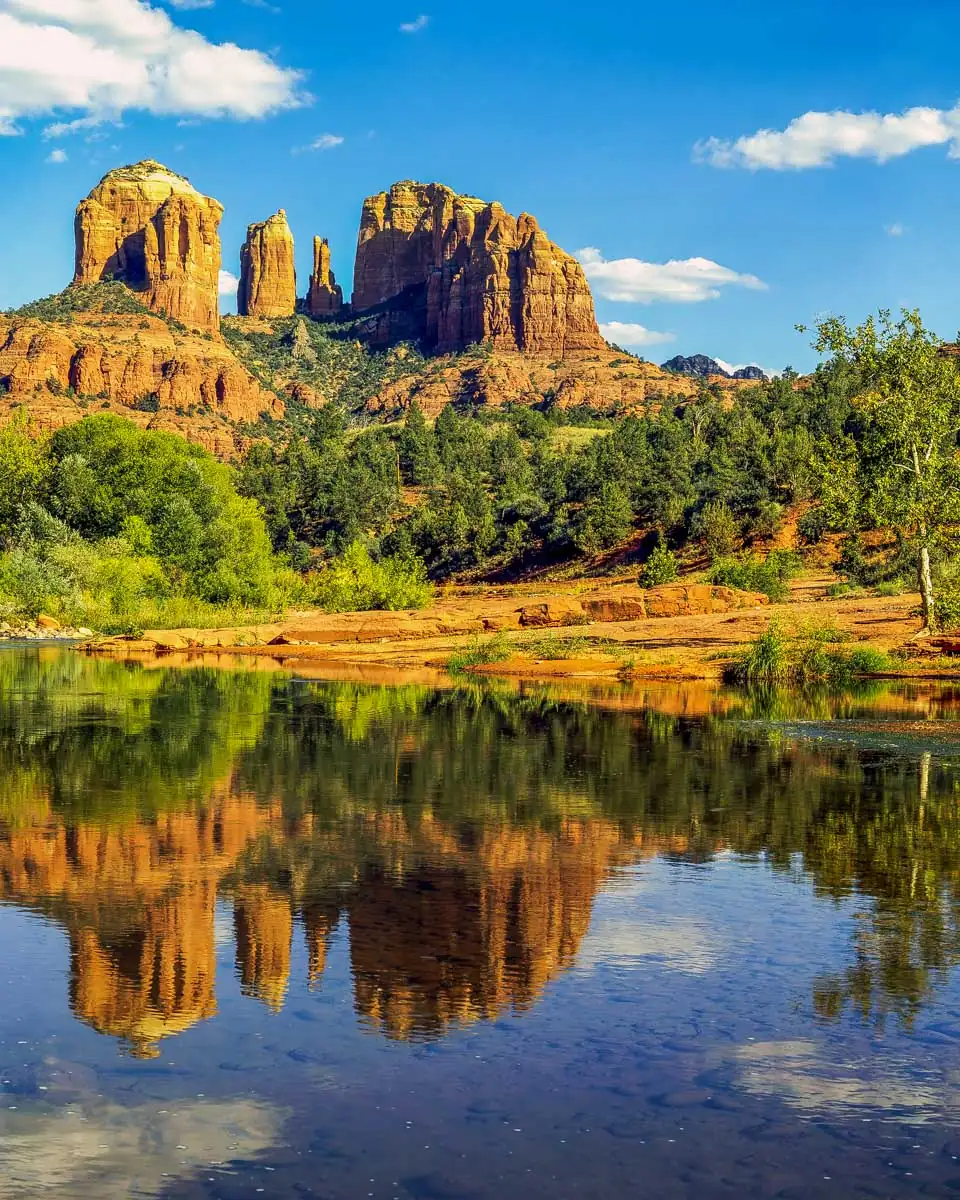
Winter is Sedona's secret season. Highs in the upper 50s and low 60s are t-shirt weather in the sun by desert standards, nights drop below freezing, and the year's lowest crowds spread across all of it. A handful of times each winter, a storm dusts the red rocks with snow that burns off by noon — photographers plan entire trips around the possibility, and our hero photo at the top of this page is why.
The season's one big week is the Sedona International Film Festival, held in late February (the 2026 edition ran February 21 to March 1), when town fills with filmmakers and every restaurant books out. Come for it deliberately or avoid it deliberately — just don't stumble into it. Otherwise, winter is when Sedona's spas, galleries and tasting rooms make sense as a main event rather than a rest day, and when a one-day visit following our 12 Hours in Sedona plan runs exactly on schedule, unhurried. January also pairs naturally with the high country: it's the one month you can hike Sedona in the morning and ski near Flagstaff the next day — see Arizona in January.
[AFFILIATE: Sedona tours] · [AFFILIATE: rental cars in Phoenix]
The verdict, by traveler
- First trip, no constraints: late April, May, or October. Book lodging early and hike early; the crowds are the price of perfection.
- Hikers: April and October, with November as the value pick. Full-day trails are comfortable and the light is low and golden.
- Budget travelers: January and early December for lodging deals, or July and August if you'll organize around the heat. Crowds vanish with the rates.
- Swimmers and creek people: June, before the monsoon muddies Oak Creek, or September after it clears.
- Photographers: winter for snow-on-red-rock lotteries and the year's clearest night skies; monsoon season for drama; October for color.
- Stargazers: the dry, moonless weeks of winter and fall — Sedona's dark skies are a year-round asset, best when nights are longest.
Whenever you land, the structure of a good Sedona trip barely changes: dawn on a trail, midday in town or the creek, golden hour on the rocks. Our Sedona weekend guide lays out the two-day version, and where to stay settles the lodging question before the month does.
About & Disclosure
TRVL Guide is a travel resource site. Some links on this site may be affiliate links — if you book through them, we may earn a commission at no extra cost to you. It helps keep the guides free.