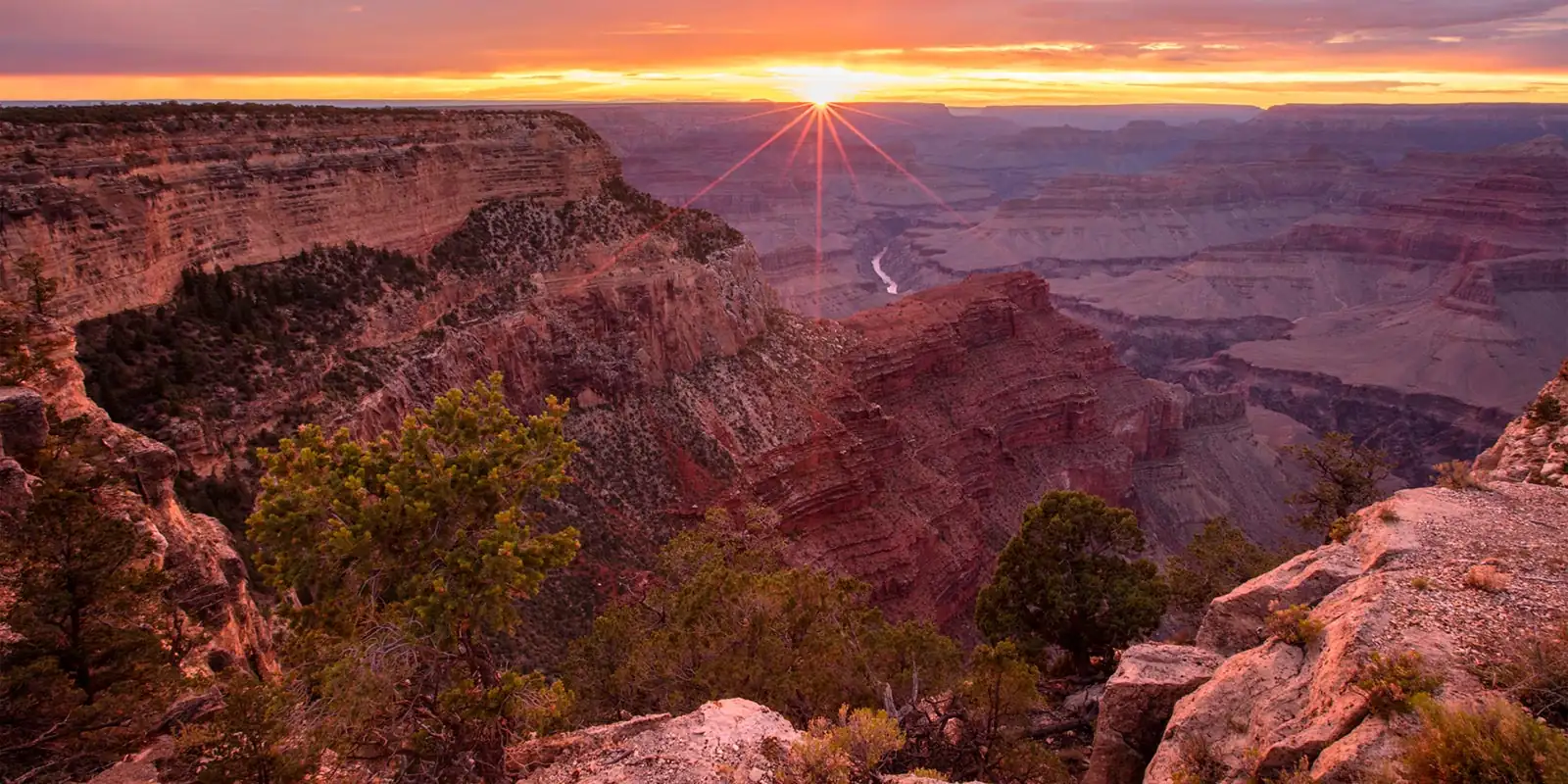
The Grand Canyon from Hopi Point on the South Rim, winter light over the gorge

See

GRAND CANYON SOUTH RIM IN WINTER

The South Rim never closes, and from December through February it hands you the one thing summer cannot: Hermit Road in your own car, a canyon full of cloud after storms, and viewpoints you do not have to share. Here is winter at the canyon, the perks and the price in cold.

Here is the Grand Canyon's best kept secret, hiding in plain sight: the South Rim is open all winter, and winter is when it drives like a different park. From December through February, the canyon is cold, bright and quiet, the summer crowds are a memory, and Hermit Road, the seven mile rim drive closed to private cars nine months of the year, opens to your own vehicle. You park at Hopi Point for sunset without a shuttle queue. You watch storms fill the canyon with cloud and leave the rim standing in sun above it. The price of admission is the cold itself: the rim sits near 7,000 feet, highs run in the low 40s, lows drop into the teens, and the trails below the rim wear ice at the top. This guide covers what winter changes, what stays open, what shuts, North Rim included, and how to drive and dress for a canyon that does not care that you came from Phoenix in a t-shirt.

South Rim in winter at a glance

When: December through February. Rim elevation about 7,000 feet; highs in the low 40s, lows in the teens, wind on top of both. The winter-only perk: Hermit Road is open to private vehicles under 22 feet in December, January and February; there is no Hermit Road shuttle in those months. Open: the South Rim year round, lodges and the village, Desert View Drive, visitor centers, Mather Campground. Closed: the North Rim for the winter season, and Hermit Road shuttle service until March 1. Entrance: $35 per private vehicle, 7 days; America the Beautiful passes honored. Drive: about 3.5 hours from Phoenix via I-17 and I-40 to AZ 64; winter storms can slow or briefly close park roads, so check the NPS conditions page the morning you go.

What winter changes

Hopi Point on the Grand Canyon's South Rim, one of the nine overlooks on Hermit Road that private cars can reach in winter
Hopi Point, the sunset seat on Hermit Road. From December through February you can drive to it yourself, at your own pace.

Winter does not just empty the South Rim. It changes the rules of the park in your favor, as long as you respect the temperature that comes with them.

The Perk · December to February

Hermit Road opens to your car

Nine months of the year, the only motorized way down Hermit Road is the park's free Red Route shuttle. In December, January and February the rule flips: per the National Park Service, Hermit Road is open to private vehicles under 22 feet, and the shuttle does not run. That means all nine overlooks, Trailview, Maricopa, Powell, Hopi, Mohave, the Abyss, Monument Creek Vista, Pima and Hermits Rest at the end, on your schedule: sunrise at Powell Point without a busload, an unhurried hour at Hopi Point for the sunset everyone else queues for in July, and nobody checking a timetable over your shoulder. The same freedom comes with the winter fine print: the road can close during and after storms until it is cleared, and there is no shuttle fallback while it is shut. Verdict: this one rule is reason enough to come in winter. The rim's best drive, as a drive, only exists for these three months.

The Sky · Inversions and Snow

The canyon fills with cloud, and the rim stands above it

Winter storms do a thing at the canyon that summer visitors never see. Cold air and cloud pour into the gorge and pool there, a temperature inversion, and from the rim you stand in blue sky looking down at a white sea filling the canyon to the brim, with only the temples and buttes poking through like islands. It is the single most photographed winter phenomenon in the park, and it cannot be scheduled; it follows winter storms, so the day after a storm is the day to be standing at Mather Point early. Snow behaves the same way: it whitens the rim and the top of the trails while the canyon floor, nearly 5,000 feet lower, stays snow free and far milder. Verdict: plan one flexible morning in your trip and spend it on the rim right after weather moves through. That is the inversion window, and it beats any fixed itinerary.

What is open, what is not

Open · The Village in Winter

Lodges, food and the rim trail all run

The South Rim is a year round town. The village lodges, El Tovar, Bright Angel, Maswik, Yavapai and Thunderbird and Kachina, operate through winter, the visitor center at Mather Point keeps winter hours, and Mather Campground stays open all year for the hardy. The park's village and Kaibab shuttle routes run in winter on reduced schedules, and Desert View Drive east to the Watchtower is open to private vehicles all year, weather permitting, which makes it the reliable scenic drive on a storm day when Hermit Road is waiting for plows. The Rim Trail, thirteen mostly flat miles along the edge, is the winter walk: icy in shaded patches after storms, deserted between viewpoints, and the canyon light in December is low and golden by mid afternoon. Dress like you mean it and the village half of the park needs no compromises at all. Verdict: nothing about a winter trip is roughing it unless you choose the campground. The park is open; it is the crowds that closed.

Closed · The North Rim and the Icy Trails

The other rim sleeps, and the trails bite at the top

The North Rim is closed for the winter season, its road in from Jacob Lake shut and its services down until spring; after the Dragon Bravo Fire, its longer recovery story is one we track in our North Rim status guide, and winter is simply not its season in any year. Below the South Rim, the corridor trails stay open but change character: the top sections of the Bright Angel and South Kaibab trails hold ice and packed snow for weeks, in shade that never melts between storms. Rangers' standing advice applies double in winter: traction devices for your boots, no hiking below the rim without them, and turnaround times set by the roughly ten hours of December daylight, not by your legs. Winter is a rim season first and a hiking season second. Verdict: come for the rim, the drive and the light. Treat anything below the rim as a bonus that requires spikes, daylight math and humility.

Driving and daylight

The Drive · Phoenix to the Rim in Winter

Three and a half hours, two climates, one rule

The run from Phoenix is about 3.5 hours in clear weather: I-17 north to Flagstaff at 7,000 feet, then west and north on I-40 and AZ 64, or AZ 64 straight north from Williams. Winter adds two variables. Flagstaff's stretch of your route can be in active snow when Phoenix is in the 60s, and park roads themselves close briefly during storms while crews clear them, per the park's own conditions page, which is updated faster than any guide can be. Fill the tank and charge the phones before Williams or Flagstaff, keep the NPS conditions page and AZ511 as your morning check, and build your arrival for daylight: the sun sets around 5:20 p.m. in December, and the last hour of light on the canyon is the one you drove up for. Verdict: leave Phoenix by late morning, arrive for golden hour, and never schedule a winter rim arrival after dark if you can help it.

The honest warnings

The cold is the real thing, not a footnote. Teens at night, low 40s at noon, and a rim wind that cuts through the jacket that works in Flagstaff. Gloves and a hat are not accessories here; they are the difference between watching the sunset and retreating from it. Altitude works on everyone. At about 7,000 feet, Phoenix lungs feel the stairs and the rim trail grades for a day; take the first afternoon easy and drink water like it is summer. When Hermit Road closes for snow, it closes. There is no shuttle to fall back on until March 1, so a storm day is a Desert View and village day, not a Hopi Point day. And book the lodge early anyway. Winter is quieter, not empty; in-park rooms on holiday weeks and inversion chasing weekends still go, and the in-park lodge is worth it for one reason alone: you are standing on the rim at sunrise while everyone else is driving in from Tusayan. Facts in this guide were checked against the National Park Service in early November 2026; the park's conditions page is the source of truth on the day.

Keep planning

About & Disclosure

TRVL Guide is a travel resource site. Some links on this site may be affiliate links. If you book through them, we may earn a commission at no extra cost to you. It helps keep the guides free.

Filed under See. Every landscape, landmark, park and viewpoint on trvlguide lives on the See shelf, next to Eat and Do.

The trvlguide letter

Arizona, in your inbox.

One email a week in season: new guides, event weekends and the desert windows worth planning around, from Phoenix to Sedona to the Grand Canyon. Free, no spam.

Enter your email to join free: