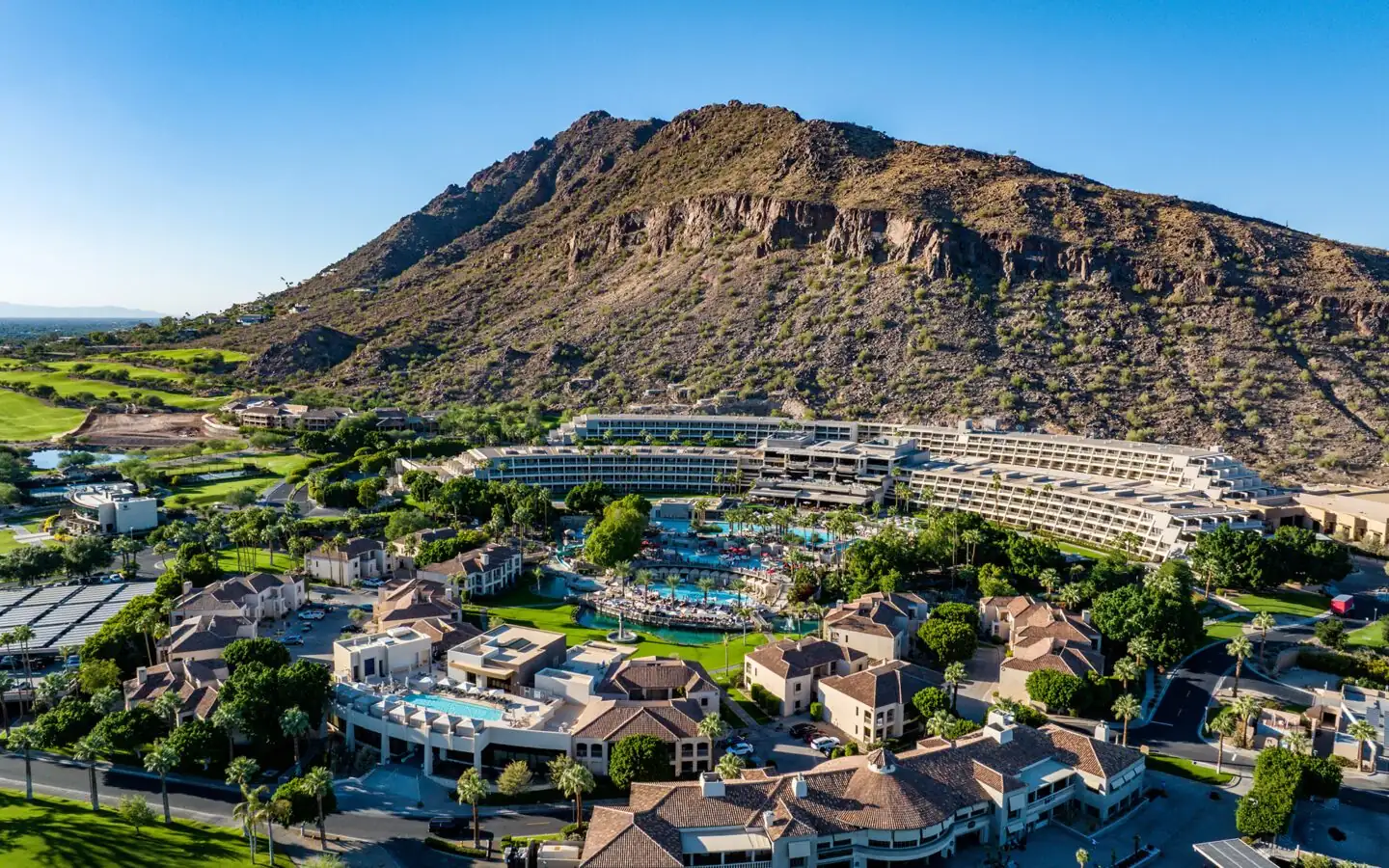
Canadians are not visitors in Arizona so much as a second population. Canada is the state’s second-largest international market after Mexico: the Arizona Office of Tourism counted about 852,000 Canadian visitors in 2024, and the Canada Arizona Business Council puts the wintering snowbird population at roughly 100,000 — people who stay a month or more, many of them for the full season, spending an average of about $3,500 a month while they’re here. They arrive in October and November, and they leave when the desert starts cooking in May. This guide is for them: where the community actually lives, and how to make the desert feel a little more like home.
One honest note before the fun: Canadian visits dipped in 2025 amid a weak loonie and cross-border politics, and some regulars sat a season out. If you’re reading this from a snowy driveway in February and reconsidering — the welcome here is genuine, the patios are full of Ontario and Alberta plates, and everything below still applies.
Where Canadians land
Mesa and the East Valley are the capital. The RV resorts and 55+ communities strung along Main Street in Mesa and out toward Apache Junction fill with Canadian flags every November; whole parks run on welcome-back dances, pickleball ladders and shuffleboard leagues by December. It is the densest snowbird community in the state, and the cheapest way into the lifestyle — our 12 hours in Phoenix & Scottsdale makes a good first-day orientation just west of it.
- Scottsdale & North Phoenix — the condo-and-golf version: resort amenities, spring training in February–March (see the spring training guide), and the priciest winter rents in the Valley.
- Tucson & Green Valley — quieter, cheaper, and serious about hiking and birding; Green Valley is a retirement community that effectively doubles in winter.
- Yuma — the RV capital of the Southwest, hard against the California border, with some of the warmest winter nights in America.
- Lake Havasu City — yes, that London Bridge; a boating town with a big Canadian winter colony and a relaxed, small-town pace.
[AFFILIATE: long-stay winter rentals in Mesa & Scottsdale] · [AFFILIATE: hotels in Scottsdale]
The season at a glance
| Month | What it feels like |
|---|---|
| Oct–Nov | Arrival season. Welcome-back events, leagues forming, the best restaurant tables of the year still bookable. |
| Dec–Jan | Peak community. Holiday lights everywhere, family flies down for Christmas, patios at their best. |
| Feb–Mar | High season: spring training baseball, the Waste Management Phoenix Open, peak rates — book visitors’ stays early. |
| Apr–May | The exodus. Yard-sale season at the parks, one last Sedona trip, then the drive or flight home before the heat. |
New to the state itself? Our Arizona in January guide is the month-by-month orientation — desert warmth, Sedona quiet season and Flagstaff skiing in one trip.
Hockey without a home team
The strange fact of Arizona hockey: the NHL left in 2024, when the Coyotes relocated to Utah — and the desert’s hockey culture refused to leave with them. For a Canadian wintering here, the rhythm survives:
- Saturday night is still Saturday night. Sports bars across the snowbird corridors of Mesa, Scottsdale and North Phoenix put Canadian games on for the winter crowd — if yours won’t, the bar down the road will. Ask for the early game; Arizona is two or three hours behind the Eastern puck drops, which means a 7 p.m. Toronto start is a civilized 4 or 5 p.m. here.
- Live hockey exists: Arizona State’s NCAA team plays at Mullett Arena in Tempe — a small, loud building and genuinely good college hockey — and the ECHL and junior circuits run through the winter.
- Or play it yourself: the ice never left. AZ Ice Gilbert (2305 E Knox Rd) runs two rinks with adult leagues and drop-in hockey all winter — the East Valley snowbird standard — and there is also ice in Mesa (Arizona Made Ice Forum on Country Club Dr), Chandler (the Ice Den’s twin NHL-size rinks) and at ASU’s community rink beside Mullett Arena in Tempe. Bring the gear; plenty do.
- The arena trivia: Arizona’s only Tim Hortons opened in 2014 as a kiosk inside the Coyotes’ Glendale arena, so snowbirds could get a double-double at the game. It left town with the team — the desert is Tims-free again, which every Canadian here has feelings about.
Yes, you can curl in the desert
The single best fact in this guide: Arizona has a dedicated curling club. The Coyotes Curling Club in Tempe (2202 W Medtronic Way) has run four sheets of dedicated ice since 2003 — leagues all winter, bonspiels, beginner-friendly Learn to Curl sessions, and a lounge called the Broken Broom. It is rated five stars by the people who sweep there, memberships start low, and a Saturday Learn to Curl is the easiest instant community a new snowbird can buy. Hurry hard, then go sit on a patio in a t-shirt. There is no more Arizona-Canada sentence than that.
The real draw: outside, all winter
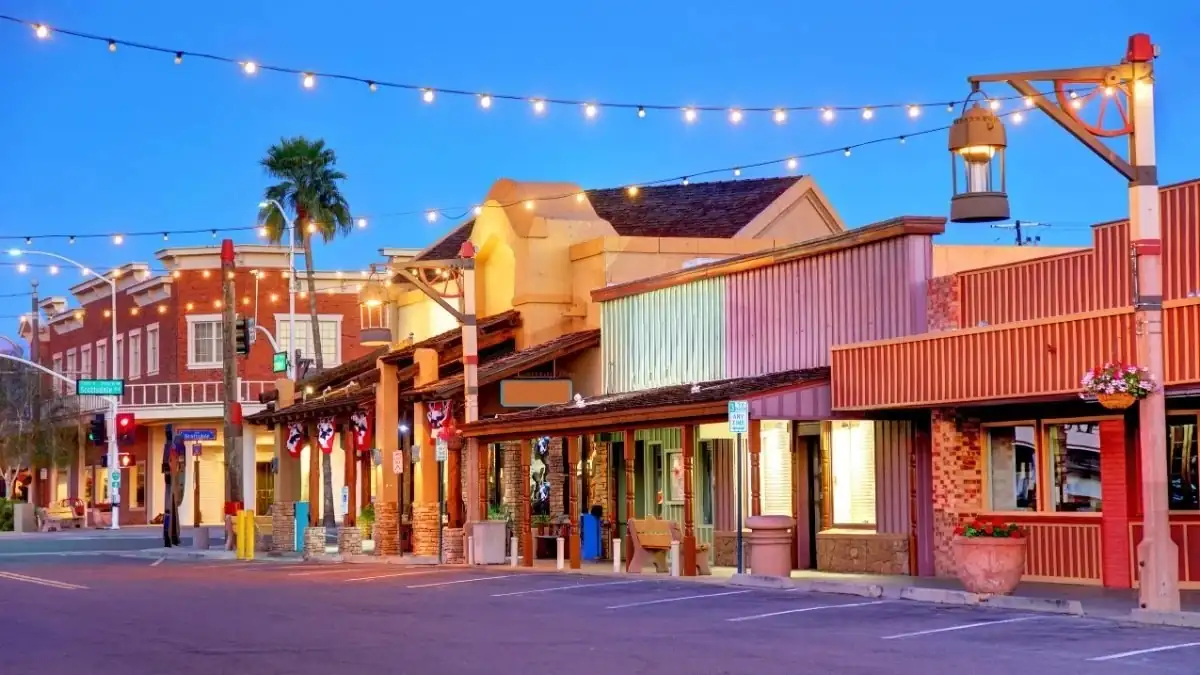
Ask a snowbird why Arizona and nobody starts with an attraction. It’s the patio coffee in January, golf in short sleeves, a hike before breakfast. The winter social circuit runs outdoors, and its capital is a pickleball court.
- Pickleball is the snowbird sport. The big East Valley RV resorts run their own courts and leagues (Good Life and Venture Out in Mesa each keep a dozen or so), and the public game is excellent and free: Gilbert Regional Park has 16 lit, competition-grade courts, first-come; Frontier Family Park in Queen Creek has 24; Red Mountain Park in Mesa adds courts beside its lake and ballfields. Arrive before 9 a.m. in January — the rotation is friendly, the standard is not.
- Golf, obviously: 200+ courses in the Valley, winter rates at their peak and tee sheets to match — book visitors’ rounds early, and treat twilight rates as the snowbird’s friend.
- The morning hike: Camelback and Piestewa in the city, the Superstitions out east by Apache Junction, Usery Mountain close to Mesa’s parks — all best before 10 a.m., all impossible at home in February.
- And the rest of the circuit: tennis and bocce at the parks, desert botanical garden mornings, spring patios — the point is the calendar fills itself once the leagues form in November.
A taste of home
- OEB Breakfast Co., Scottsdale — a Calgary-born brunch chain (inside Scottsdale Fashion Square), famous for breakfast poutine: duck-fat potatoes, cheese curds, poached eggs, brown-butter hollandaise. The most Canadian room in Arizona.
- Welcome Diner, Phoenix — a retro Roosevelt Row diner whose poutine gets called the best in the Southwest; go at night when the neon is on.
- Demi’s Poutine, North Phoenix — a dedicated poutine counter (Bell Road, inside the Walmart plaza) for when only the real thing will do.
- The grocery hunt — Coffee Crisp, ketchup chips and butter tarts are the snowbird holy trinity; World Market and the international aisles of larger Fry’s and AJ’s stores are the usual hunting grounds, and every park has one resident who knows which shelf. Ask them. It’s an icebreaker.
The practical stuff
- The 182-day rule, simply: Canadians can generally spend up to about six months a year in the US, but a separate IRS “substantial presence” count runs on a three-year formula — many snowbirds file the closer-connection form (8840) annually to stay clearly Canadian for tax purposes. Track your days, and take real advice for your situation; this is the one boring paragraph that matters most.
- Health coverage: provincial plans cover very little in the US. Travel medical insurance for the full stay is not optional — buy it before you cross, every season.
- Getting here: Phoenix Sky Harbor (PHX) runs direct Canadian service on Air Canada, WestJet and Porter — Porter has been adding routes, including Vancouver and Ottawa service announced for 2026. Mesa Gateway (AZA) handles some seasonal traffic too. Compare fares on our flights page.
- The drive: two classic runs — the prairie route down I-15 through Montana and Utah, or the coast route to I-10. Either way it’s two long days or three humane ones; our 7-day Arizona road trip turns the arrival into a victory lap.
- The car: Arizona expects long-stay residents to register vehicles here once you’re living in the state the better part of a year (the law uses a seven-month threshold) — if your winter is getting longer, check the current rules with ADOT rather than a neighbour.
[AFFILIATE: flights to Phoenix from Toronto, Vancouver & Calgary] · [AFFILIATE: long-term rental cars at Phoenix Sky Harbor]
When the grandkids visit
Every snowbird season has a second act: family flying down into your winter. The crowd-pleasers are reliable — a one-day Grand Canyon run (leave early, it’s 3.5–4 hours from the Valley), Sedona’s red rocks while the light is low, and a spring-training game if they time it to March. Book their flights and your own day trips early in February; the whole state is doing the same thing.
About & Disclosure
TRVL Guide is a travel resource site. Some links on this site may be affiliate links — if you book through them, we may earn a commission at no extra cost to you. It helps keep the guides free.